Get Full Government Meeting Transcripts, Videos, & Alerts Forever!
Get email alerts on the Facilities Assessment topic
No spam. Unsubscribe anytime.
City report finds $7.6M deferred maintenance and a 17% facilities condition index; staff to return with five‑year CIP
Summary
Public Works presented a facilities condition assessment finding an overall Facilities Condition Index of 17% (industry 'poor'), a deferred maintenance backlog of about $7.6 million and a five-year need of roughly $11.44 million; staff will prepare a prioritized five‑year capital improvement plan and return with funding options.
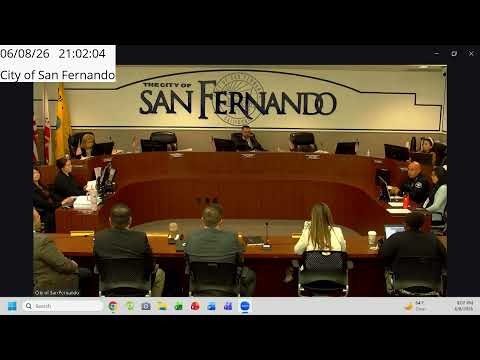
The San Fernando City Council received a facilities condition assessment (FCA) presentation on June 8 from Public Works Director Bonnie Tam and consultants, who assessed 98,700 square feet across 25 city facilities.
Key findings included a citywide Facilities Condition Index (FCI) of 17 percent—which industry standards classify as “poor”—a deferred maintenance backlog of approximately $7.6 million, and a projected five‑year total need near $11.44 million (this figure includes construction and typical soft costs such as design and permitting). The assessment identified multiple systems past useful life: 11 facilities with roof systems beyond service life, 11 facilities with pre-1985 domestic water piping, nine with electrical branch wiring older than 30 years, three with fire alarm systems beyond a 15‑year life cycle, and four with HVAC systems older than 30 years.
Bonnie Tam told the council the city’s City Hall building is among the most urgent facilities, with an FCI of 25 percent, followed by the police station at 18 percent. Staff emphasized the FCA is a diagnostic report; the council will later consider a five‑year facilities CIP that sequences projects into high (life safety/critical infrastructure), medium (building enclosure and occupant comfort) and low (cosmetic/site) priority tiers.
Council members asked whether the assessment listed urgent life‑safety items and whether ADA or seismic upgrades would be triggered by near‑term work. Staff replied that life‑safety and electrical needs would be prioritized and that ADA requirements would be evaluated if specific projects trigger them. Staff estimated the first‑year recommended scope could cost about $4.6 million and said the eventual CIP will identify potential funding sources, including general fund reserves, state and federal grants, internal service funds and lease financing.
No appropriation was requested at this meeting; staff’s recommendation was to receive and file the FCA and return with a formal CIP and proposed funding mix for council consideration.
Next steps: Staff will draft and return with a five‑year facilities CIP that identifies specific projects, priority tiers, and proposed funding strategies for council action.