Get Full Government Meeting Transcripts, Videos, & Alerts Forever!
Get email alerts on the Education Ai Policy topic
No spam. Unsubscribe anytime.
Pequannock students and staff outline AI policy goals, privacy safeguards and next steps
Summary
Students, teachers and administrators on the Pequannock Township School District AI committee said the district will adopt guidance that treats AI as a classroom supplement, requires FERPA-aligned vendor commitments, launches a student-built website and offers parent and teacher outreach this summer.
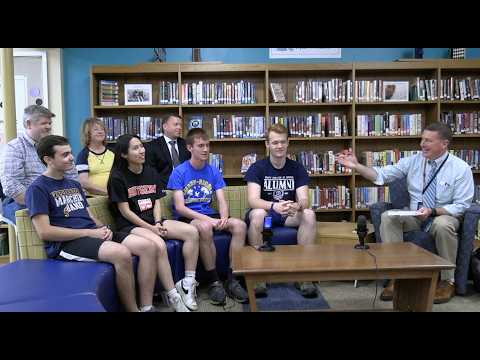
Pequannock Township School District Superintendent Michael Poris convened students, teachers and administrators to review the AI committee's work and next steps, saying the effort exists to let stakeholders shape how the district uses artificial intelligence in classrooms.
Student leaders described the committee's central aim as defining "appropriate AI usage and adopting it within the classroom in a way that doesn't replace anything in the curriculum," said Sean, a student participant. Committee members said the policy is intended to prepare students for college and the workforce while keeping instruction and assessments fair.
Chief Technology Officer Mr. Shay told the group the district will require classroom AI vendors to commit to protections under the Family Educational Rights and Privacy Act (FERPA). "We require vendors to be FERPA-compliant and not sell or expose students' personally identifying information," he said, noting that many providers have not yet made binding commitments to that standard.
Students said the committee has built a public website of vetted tools and resources for families and staff that lists classroom-friendly systems such as NotebookLM, Gemini, Magic School AI and ChatGPT. The site is intended to translate the district's policy (Board Policy 2365) into plain language for parents and students and to give teachers vetted options they can monitor.
On classroom rules, students and staff emphasized the district's honor code and academic integrity. "AI should be a tool, not a crutch," one student said, and committee members discussed rubrics, citation expectations and restorative consequences for inappropriate use to ensure students continue to develop their own skills.
The committee also addressed broader risks: distinguishing AI output from human work, possible job impacts, environmental costs of large data centers and misuse such as inappropriate AI-generated images. Members said ethics training, clear expectations and ongoing review of the policy will be important guardrails.
Next steps include rolling out the student-built website and a companion app by the end of June, hosting parent education events, sending newsletters to staff and students, and developing elective course material on AI. The group said implementation and training will be ongoing as tools and risks evolve.
Poris closed the session by thanking volunteers and urging continued engagement: "We'll keep the door open," he said, encouraging families and staff to review materials and participate in upcoming outreach.