Get Full Government Meeting Transcripts, Videos, & Alerts Forever!
Get email alerts on the Zoning Actions topic
No spam. Unsubscribe anytime.
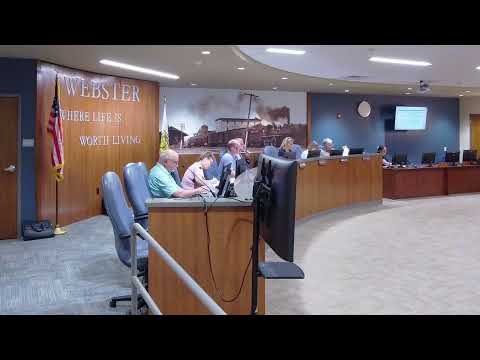
Webster ZBA approves variances for accessory buildings, subdivisions and lot-line corrections
Summary
At its June 9 meeting the ZBA granted area variances for accessory structures at 101 Midnight Trail and 514 Clem Road, approved a Bay Ridge lot-line resubdivision to tidy existing nonconformities, and approved a two-lot subdivision at 1640 Lake Road. Most actions were granted as Type II SEQRA determinations.
The Town of Webster Zoning Board of Appeals on June 9 approved several area variances and subdivision adjustments across town, finding each action consistent with neighborhood character and with limited environmental impact.
Key outcomes at a glance:
- 101 Midnight Trail (applicant Joe Herpst): Area variance granted to allow a 20x24 pole barn with a 44-foot front setback where 75 feet is required. The board found the siting minimized tree removal on a 5.35-acre parcel and noted neighbor support. (Motion and approval recorded during the meeting.)
- 514 Clem Road (applicant Michael Meyer): Area variance granted to expand an attached garage with a side setback of 13.3 feet where 15 feet is required. The board found the expansion consistent with surrounding two-car garages and granted the variance.
- Bay Ridge resubdivision (representatives Tom Sutherland and Scott Mes): The board approved lot-line adjustments to convert five parcels into four, resolving existing buildings that straddled old lot lines. Drainage fixes (a 15-inch culvert) and septic replacement were introduced; the board labeled the action a Type II SEQRA matter and approved the requested variances.
- 1640 Lake Road (Brian White, McMahon): The board granted variances to permit two narrower lots (approx. 162 ft and 177 ft wide) where 250 ft lot width is required, citing similar approvals in the area and the lots’ historical configuration.
Most approvals were accompanied by standard conditions (obtaining necessary building permits and a one-year timeline for substantial completion where applicable). Several actions were categorized as Type II under SEQRA (NYCRR §617.5(c)).