Get Full Government Meeting Transcripts, Videos, & Alerts Forever!
Get email alerts on the Land Use topic
No spam. Unsubscribe anytime.
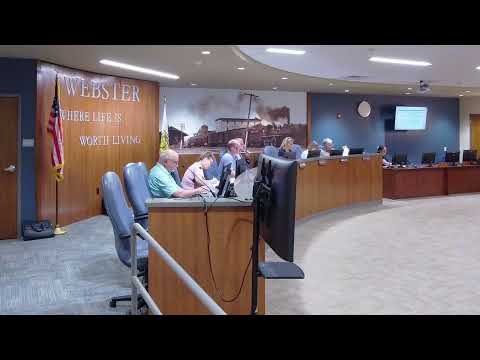
Webster ZBA reviews citizen appeal challenging solar project approvals; tribunal tables decision to July
Summary
A citizen appeal argued that town staff and boards improperly classified Montante’s proposed solar project—omitting a required special-use review—and that later project changes were not re-reviewed. The ZBA voted to table an interpretation until July 14 to review records, including an April 1 email and July 2025 minutes.
The Town of Webster Zoning Board of Appeals on June 9 heard a detailed appeal from a resident’s attorney, who argued that municipal officials and boards misprocessed approvals for a proposed Montante solar project at 139 Caracus Drive and that the ZBA should halt further action until the planning board reexamines the matter.
Attorney representing the challenger, identified in the record as Mr. Hannah, told the board that the original application was incomplete and that town staff and boards treated the project as an industrial use only—even though Montante later removed panels from the landfill portion of the site, a change he said made the earlier Type II SEQRA classification inapplicable. “For the first time a citizen has actually brought a challenge to the zoning board of appeals,” Hannah said, and he argued the town’s approvals were “procedurally deficient from top to bottom.”
Why it matters: The appeal centers on whether the project required a special-use permit and fuller environmental review. Mr. Hannah said town staff (identified in the record as Josh Artuso) forwarded an incomplete application and that the town board and planning board failed to require a special-use permit the law requires for the project’s scope. He said Montante later admitted the project was changed by 20 percent—above the town’s 10 percent threshold for a “substantial change”—which should have triggered fresh review.
Town counsel, speaking to the board’s role and limits, urged the ZBA to focus narrowly on the administrative official’s determination and on whether the appeal was timely under Town Law. Counsel read the statute’s 60-day filing window and explained the board must decide whether a public record—an April 1 email from Mr. Artuso or the July 2025 town-board resolution—started the statutory clock. “The question is whether the filing was timely,” counsel said; board members repeatedly asked staff to provide the July minutes and the April correspondence so they could be certain about timeliness.
After extended discussion over the record and what constitutes an official, public decision, the ZBA voted to table the appeal until its July 14 meeting to allow members to review the July 2025 town-board minutes, the April 1 email and other documentation that both sides cited.
What was said: Mr. Hannah characterized the approvals as both procedurally and substantively flawed, saying, “This approval is procedurally deficient from top to bottom.” Opposing counsel and board advisors disputed the breadth of that argument, urging the board to confine its review to the administrative determination and the statutory timing for appeal.
What comes next: The ZBA asked staff to circulate the July 2025 town-board minutes and the April 1 email in advance of the July 14 meeting. The board’s decision to table preserves the parties’ right to pursue parallel remedies: the transcript notes an article 78 proceeding has already been filed by opponents, which could proceed regardless of the ZBA’s action.
Documentation and evidence in the meeting record indicate the debate will hinge on the timeline of public notices and whether a substantive project change required renewed planning-board review.