Get Full Government Meeting Transcripts, Videos, & Alerts Forever!
Get email alerts on the Zoning Landscape topic
No spam. Unsubscribe anytime.
Planning and Housing Commission recommends approval of Corona landscape, turf and fencing code updates
Summary
The Planning and Housing Commission recommended approval of ZTA 2026-00001 to update Chapter 17.70 of the Corona Municipal Code to align with the state model water-efficiency ordinance, lower landscape-permit thresholds, prohibit turf in most nonresidential uses, and expand front-yard fencing options; staff also presented a consolidated Landscape Design Manual (Resolution 2687).
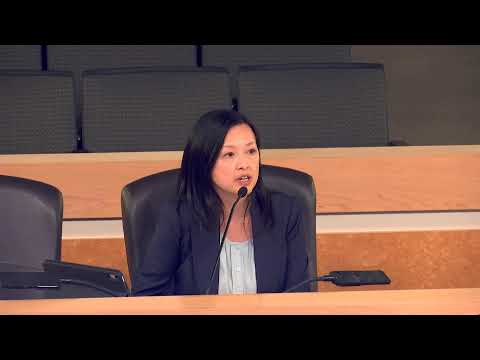
The City of Corona Planning and Housing Commission on June 2026 voted to recommend that the City Council approve ZTA 2026-00001, an amendment to Chapter 17.70 of the Corona Municipal Code that updates local landscape and fencing rules to reflect recent state changes and to adopt a consolidated Landscape Design Manual (Resolution 2687). Planning manager Miss Vanian presented the staff report and recommended the amendment.
Miss Vanian told the commission the update is "a much-needed code update," explaining the city has been implementing the state's Model Water Efficiency Landscape Ordinance (MWELO) in practice but needed to codify recent changes. The amendment lowers the thresholds that require a landscape permit: new-construction landscape projects will require permits at 500 square feet, and landscape renovations will require permits at 2,500 square feet. For projects between 500 and 2,500 square feet the city will allow an "easier compliance" prescriptive option that reduces technical documentation requirements while still requiring submittal of a landscape plan.
The amendment would prohibit turf in all nonresidential developments except where turf serves a recreational or functional purpose; Miss Vanian noted the city has long prohibited turf for commercial and industrial uses and is expanding that restriction to other nonresidential categories. The proposal also consolidates two existing landscape design guidelines into one comprehensive manual intended to provide technical guidance to landscape professionals and homeowners and to ensure local requirements align with the state.
On fencing, staff proposed increasing allowable solid front-yard wall heights from 3 to 4 feet (opaque portions) while maintaining a 5-foot maximum for combinations of low walls topped with open fencing such as wrought iron. Decorative pilaster toppers would be permitted up to a total of 6 feet. The code would explicitly permit wood picket fences and broaden allowable materials for front-yard fences to include steel, aluminum, PVC/vinyl, decorative masonry (brick, stone, fiber cement) and other durable finishes, subject to decorative/texture requirements for masonry.
Miss Vanian also advised the commission the city is preparing for anticipated CalFire guidance for the "zone zero" (the first 5 feet around a structure), which is expected to restrict combustible fencing materials in that zone. The amendment proposes allowing noncombustible materials in areas where the state requires them and anticipates a multi-year compliance window the state may set.
Commissioners asked detailed follow-up questions about grandfathering, enforcement, recreational courts, and developer versus homeowner responsibilities. Miss Vanian said existing, permanently constructed sports courts would not be retroactively required to comply with new standards; enforcement of fencing and similar standards is largely complaint-driven; and developers are reviewed closely through discretionary review and plan checks (developers proposing landscaping prior to sale would be reviewed for side and rear yards where applicable). She also confirmed reclaimed (recycled) water is available to some nonresidential sites but that residential hook-up is not mandatory citywide.
Commissioner Woody moved that the commission recommend approval of ZTA 2026-00001 to the City Council based on the findings in the staff report and adopt Resolution 2687 approving the Landscape Design Manual; the motion was seconded by the Vice Chair. The chair announced the motion passed (the transcript records the outcome as "that passes 30").
The commission's action is a recommendation; the City Council will consider the ordinance amendment and the Landscape Design Manual at a subsequent public hearing. Resolution 2687 and the consolidated manual were the documents recommended for adoption to the Council.
Proper names noted during the hearing included the Corona Regional Medical Center, Riverside Community College District (RCCD) and the Corona Education Center (planned campus), and consultant Inner West Consulting Group (credited for the manual). Several private businesses were cited in the meeting's opening presentation as downtown anchors (Claros, Circle City Tavern, Windown).