Get Full Government Meeting Transcripts, Videos, & Alerts Forever!
Get email alerts on the Quarry Permit topic
No spam. Unsubscribe anytime.
Planning commission continues quarry reactivation hearing amid blasting-notification and sediment concerns
Summary
The Winchester Planning & Zoning Commission continued the public hearing on a special permit to reactivate the Pepper quarry to June 22 after questioning blasting-notification records, sediment-setback risks and signage compliance; the applicant agreed to phased work limited to three acres at a time and additional erosion controls.
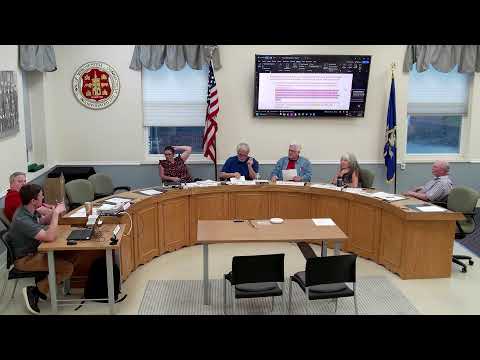
The Winchester Planning & Zoning Commission on June 8 continued the public hearing for the special permit to reactivate the quarry at the Pepper property on the Torington town line, while directing the applicant to clarify notifications, blasting procedures and final map details.
The applicant said the property was purchased to reactivate the quarry and that, prior to approvals, the site is being used for storage "there's just some storage on the property" and that larger material will initially be taken to the Torington recycle yard for crushing to reduce on-site piles. The applicant told commissioners the project team revised maps to incorporate engineer comments on drainage and sediment control and agreed to a condition limiting active disturbance to three acres at a time.
Commissioners pressed the applicant on setbacks, conveyors and pile placement, noting conveyors and material stockpiles could come close to wetlands or the 100‑foot setback. The applicant said anti-tracking pads, a water tanker, sweepers and standard erosion-control measures will be used and that some material will be hauled off-site to avoid large on-site piles.
Blasting procedures and neighbor notifications were a central concern. Commissioners said the original Pepper permit required a petition of neighbors to receive blasting notices, but staff and the applicant said the petition could not be located in the record. The applicant said blasting work is subcontracted to Bay State Blasting and that the contractor performs pre‑blast surveys and adheres to state regulations. Staff noted that fire‑marshal/state rules govern which residents are entitled to pre‑blast surveys (typically those within a set distance of the blast), and commissioners discussed whether the relevant measurement is from the blast site or the property line.
Jen Pera of the Winchester Land Trust came forward during public comment and asked whether the land trust should have been notified; staff replied that only abutters receive planning notices and that the land trust's parcels do not abut the site (staff later said the nearest land‑trust corner is about 700 feet from the quarry parcel).
Staff read eight draft conditions tied to wetlands approvals and other standard requirements and said any additional wording recommended by the wetland zoning official would be added. The commission voted to close testimony for PC‑265 and continued the public hearing to June 22 at the applicant's written request so the applicant can finalize revised plans.
Next steps: the applicant will provide revised plans reflecting the engineer and planning comments, staff will circulate a clarified draft of the conditions, and the commission will resume the hearing on June 22.