Get Full Government Meeting Transcripts, Videos, & Alerts Forever!
Get email alerts on the Solid Waste Recycling topic
No spam. Unsubscribe anytime.
Skowhegan voters approve solid-waste budget as debate over commercial tipping fees and recycling heats up
Summary
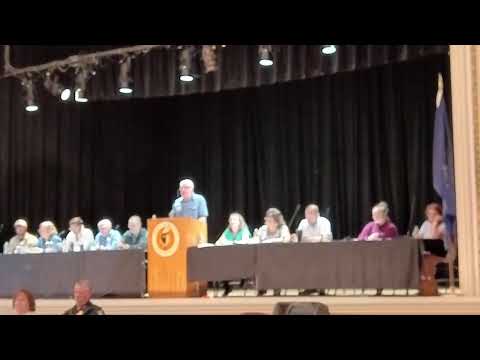
At the June 8 town meeting, voters approved Article 10 (solid waste and recycling appropriation). Residents pressed officials over a budget cut that they said shifts recycling and disposal costs to taxpayers; the transportation superintendent said rising disposal contracts and 'about 75% of that number is commercially hauled waste.'
Skowhegan — Voters approved Article 10, the town’s appropriation for solid waste and recycling, after an extended debate over recent budget cuts and who should bear higher disposal costs.
Citizens and several speakers objected to a plan that reduces the town budget for waste services and, they said, passes more costs onto taxpayers and small businesses. “We are dumping a lot of recyclables in those dumpsters straight of our picking up tab,” one speaker said during public comment, arguing the town currently subsidizes commercial haulers.
Cindy, the town’s transportation superintendent, told attendees that disposal contracts are rising and that roughly “about 75% of that number is commercially hauled waste,” meaning much of the expense reflects commercial dumpsters and business-generated waste rather than residential curbside trash. She said contract escalation is partly pre‑set in vendor agreements and will continue to push the line-item higher in future years.
Several speakers urged a phased approach to any change: one proposal discussed during the meeting was reserving $250,000 from surplus as a six‑month buffer to give the town time to design a new policy that shifts costs more directly to commercial haulers instead of residential taxpayers. Supporters argued the reserve would provide time for feasibility studies and outreach to haulers and nearby communities that share commercial routes; opponents cautioned that using one‑time reserves could create recurring gaps if not paired with policy changes.
The discussion also flagged practical challenges: mixing recyclables into commercial dumpsters makes separation difficult, and some commenters said the town’s current transfer station rules and convenience for businesses distort incentives to recycle. Multiple residents asked the select board to consider a feasibility study and more public input before structural changes take effect.
After the debate, voters approved Article 10 as presented. The meeting record shows the article carried by voice/raise-of-hands vote.