Get Full Government Meeting Transcripts, Videos, & Alerts Forever!
Get email alerts on the Subcommittee Recruitment Compensation topic
No spam. Unsubscribe anytime.
Community and Lived Experience subcommittee asks Department of Public Health for clarity on recruitment, compensation and role
Summary
Members pressed Department of Public Health staff to explain who was recruited, how lived‑experience participants will be compensated and what the subcommittee’s charter requires; staff said recruitment met statutory minimums but compensation and role details remain under internal review and will be returned to the group in July.
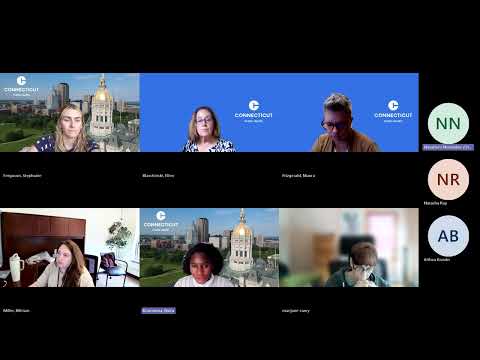
Members of the Community and Lived Experience Subcommittee of the maternal health task force urged Department of Public Health staff during a lengthy meeting to clarify how individuals with lived experience are being recruited, whether and how they will be compensated and what the subcommittee’s role will be relative to other working groups.
Natasha, a subcommittee member leading the meeting, opened discussion after the office read minutes from the prior gathering and confirmed that "recruitment process is almost at its final stage," according to staff remarks. Stephanie, representing the Office of Health Equity, told members that the commissioner would issue appointment letters in the coming week and that the statutory minimum—two lived‑experience members per statutorily required subcommittee—has been met for three of the four committees.
The exchange turned tense when several members said they were surprised that people recruited for other subcommittees had been assigned without what they described as adequate notice or a role orientation. "It sounds like we've just gotten front of our skis here," one member said, adding the group needed a clearer purpose and transparency about assignments. Mary Jane warned the subcommittee risked becoming "performative" unless the group had a distinct, useful charter and clear expectations for community participants.
Staff acknowledged mixed messaging and said compensation had not been part of the original statute. "Compensation came up later after recruitment was already the priority to meet the legislative requirement," Stephanie said, and noted the team was still determining whether compensation would come from the maternal health innovation grant or another budget source. Staff committed to returning with clarification on the budget and the compensation approach.
Members proposed several potential roles for the subcommittee, including serving as a "landing space" or mentoring body to prepare lived‑experience participants for intensive technical subcommittees, and serving on an ad hoc basis to review deliverables such as the maternal health data dashboard and the doula‑friendly hospital work. Mara, who identified herself as the TPH chief marketing officer, urged the group to ensure that the dashboard and resulting communications were "relatable and actionable for people in the community," not solely a technical product from the department.
There were no formal votes or policy actions. The subcommittee concluded by asking DPH staff to (1) reconvene internal leadership conversations about recruitment and compensation; (2) share the charter or guiding documents that define the subcommittee’s purpose; and (3) circulate clearer materials so members could decide whether to meet monthly, switch to ad hoc review, or reduce meeting length. Staff and members agreed to revisit the items at the next scheduled meeting in July.
The meeting adjourned at 3:45 p.m.