Get Full Government Meeting Transcripts, Videos, & Alerts Forever!
Get email alerts on the Transportation topic
No spam. Unsubscribe anytime.
Whitman-Hanson committee prioritizes transportation study amid budget and equity concerns
Summary
The Whitman-Hanson Regional Agreement Committee agreed to prioritize transportation after members warned changes to start times and cost-allocation methods could shift hundreds of thousands of dollars between towns and create inequitable outcomes. Staff will present prepared data at the June 17 meeting.
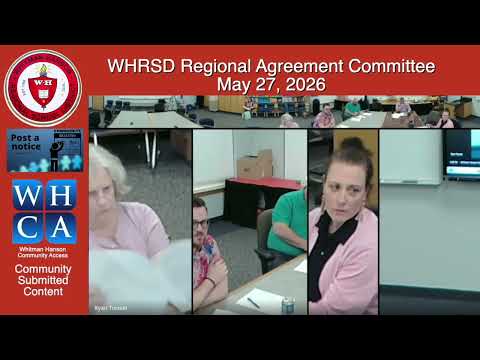
The Whitman-Hanson Regional Agreement Committee voted to make transportation its top review item, directing district staff to present detailed ridership and cost data at the committee's next meeting on June 17.
Committee members said they want a two-step process: an initial presentation of the district's updated transportation assessments followed by a follow-up meeting to dig into specific cost scenarios. "We now have quite a bit of data about who's riding, how many kids are riding, how much it costs," a district staffer said during the meeting.
Members said the committee must examine how alternative approaches'including mileage-based versus per-pupil formulas and possible start-time changes'would affect assessments for Whitman and Hanson. Several speakers warned that shifting how transportation is classified in the regional agreement or the operational budget could reassign substantial costs from one town to the other.
The committee discussed multiple options for how non-mandated busing is handled: as part of the district's operating budget, as separate town warrant articles, or governed by school committee policy. One participant referenced Chapter 71, Section 16C and read aloud its language noting an apparent tension between the statute's broad obligation to provide transportation K'through'12 and the statute's reimbursement exclusions for pupils who live less than 1.5 miles from school. Members said the statutory wording has been read differently by stakeholders and recommended clarity via policy language or legislative change.
Several speakers urged the committee to prepare questions in advance so staff (including Mr. Wells) can assemble the precise data needed to model the range of financial impacts. "If we had a pre-meeting where we really talked about it, we could say to Matt, can we get this information and that information," one member said, arguing this would prevent surprises at town meetings.
Members also emphasized service quality: packing buses to lower per-student costs could increase ride times, with some historic routes running 45 minutes or longer for young children. The committee agreed that any cost-savings analysis must weigh ride length and student welfare against budget impacts.
The committee's next meeting will focus on the transportation presentation; members asked district staff to bring breakdowns of mandated and non-mandated ridership, mileage and per-pupil cost models, and the existing assessment calculations so select boards and finance committees can be briefed before town meetings.