Get Full Government Meeting Transcripts, Videos, & Alerts Forever!
Get email alerts on the Cell Tower Leases topic
No spam. Unsubscribe anytime.
Board hears proposal for two Verizon-sponsored cell-tower leases at MUSD campuses; no action taken
Summary
District staff presented two possible Verizon-sponsored cell-tower lease sites (Desert Sunrise High and Desert Wind Middle), described a stealth monopole design and lease economics, and answered board questions about access, liability and community input. The presentation was informational only; no contract or approval occurred.
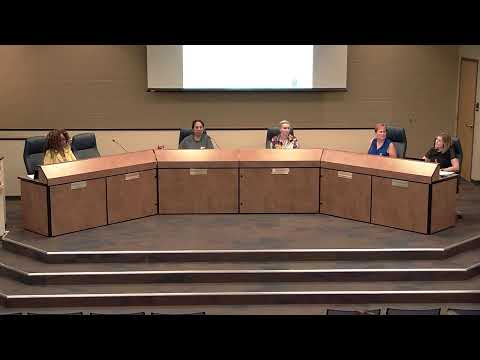
The Maricopa Unified School District board on June 10 received an informational presentation about potential cell-tower land leases on two district properties and did not take action.
Staff member Mister Harmon said AnthemNet and Verizon have completed initial planning for two sites: one on the western edge of Desert Sunrise High School and one near the parking lot and Tarragona Boulevard at Desert Wind Middle School. Harmon described the proposed structure as a stealth monopole designed to resemble a tree, with a center antenna height of approximately 104 feet and camouflaging branches to reduce visual impact.
Economics and safety: Harmon said the proposed lease terms would pay the district $1,500 per month per tower with a 2% annual escalator, a $5,000 one-time lease commencement payment and $2,500 one-time payments for each additional carrier that joins the site; he estimated combined annual revenue from both sites of about $36,000. He also said every installation would require a structural analysis and a Federal Communications Commission maximum permissible exposure study to ensure compliance with safety limits.
Board questions and concerns: Board members asked how off-hours access to a fenced site would be handled, who would be liable if gates were left open, whether nearby residents needed to be asked for permission, and whether community members would have an opportunity to review studies or provide input. Harmon said providers would request city and resident approvals as required, would be responsible for proposing required permissions, and that contracts would include liability and access language to protect the district. On community review, Harmon said staff would get clarity on whether a public hearing or other community-review process would be required if the board chose to move forward.
Removal and termination: Board members asked what would happen if a provider stopped using a site; Harmon said contract language would require removal of infrastructure and restoration of the site if the tower were no longer needed.
No action: The presentation was listed as an informational item; the board did not vote on leases and took no contractual action. Board members and staff noted the item was being discussed early to allow community members time to follow the issue before any formal approvals.
Representative quote: "Every installation ... requires a structural analysis and a maximum permissible exposure study to ensure strict adherence to FCC state safety limits," Mister Harmon said. "They would have gate access to our sites, if there was an event, and we would have a contract that would have the necessary language to ensure that we were safe."