Get Full Government Meeting Transcripts, Videos, & Alerts Forever!
Get email alerts on the Student Aid topic
No spam. Unsubscribe anytime.
Lawmaker urges colleagues to oppose HR7892, warns it could block aid for legitimate students
Summary
On the House floor a lawmaker urged rejection of HR7892 (the so-called No Aid to Go Students Act), saying it would codify untested identity-fraud rules into the FAFSA process, risk denying aid to legitimate students, and could be used to target colleges.
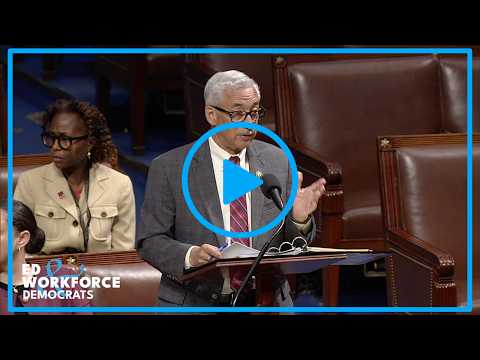
A lawmaker on the House floor urged colleagues to vote against HR7892, the so-called No Aid to Go Students Act, saying the measure would rush untested identity-fraud rules into the Free Application for Federal Student Aid process and risk denying aid to legitimate students.
The lawmaker said the bill would require the Department of Education to implement an identity-fraud detection system within FAFSA and authorize accelerated program reviews of colleges. “The Department of Education just recently, this past April, launched a new identity fraud detection system as part of the FAFSA process,” the lawmaker said, adding that the system is still being tested and that Congress has not seen meaningful evidence of its effectiveness or of its impact on students.
The lawmaker framed the debate as a choice between fraud prevention and student access, noting that federal student aid helps nearly 13 million students every year. The lawmaker warned that vague enforcement standards and punitive mandates in the bill could make it harder for legitimate students to obtain funds: if a student is incorrectly flagged as suspicious, “colleges [would be] prohibited from distributing funds to those students until the suspicion is cleared up,” the lawmaker said, which could affect their ability to pay for housing, transportation, or books.
The speaker urged the House to allow the Education Department’s recently launched system to be evaluated and to work with colleges, financial-aid administrators and fraud experts to design guardrails before enshrining requirements and penalties in statute. “Codifying this new system without assessing its effectiveness just doesn't make any sense,” the lawmaker said.
The lawmaker also argued the bill could be used politically. Pointing to what they called prior efforts by the Trump administration to withhold Title 4 funding and to insert ideological conditions into participation agreements, the lawmaker said HR7892 “could reasonably be viewed as part of a broader strategy to weaponize student aid” by giving administrations another tool to target certain colleges or states based on limited evidence.
The lawmaker criticized the bill for lacking a clear definition of what constitutes “reasonable suspicion” of identity fraud and said the measure reached the floor without addressing that gap. The lawmaker concluded by urging colleagues to vote no on HR7892 and reserved the balance of their time.