Get Full Government Meeting Transcripts, Videos, & Alerts Forever!
Get email alerts on the Local Governance topic
No spam. Unsubscribe anytime.
San Bernardino council presses staff for timelines, forensic audit and measurable goals
Summary
Council members and public commentators at a June special meeting pushed the city to convert its December strategic priorities into SMART objectives, requested a forensic audit and regular progress reporting, and asked staff to return with fee‑study and housing timelines by early 2027.
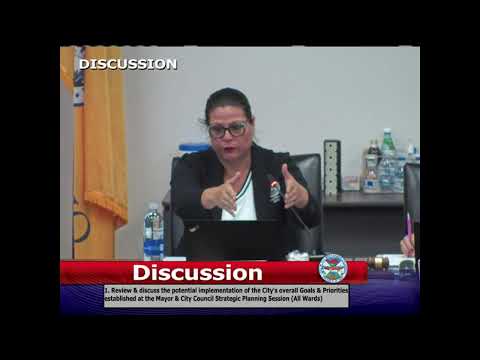
San Bernardino held a special mayor and city council meeting at 5:03 p.m. to review steps for implementing strategic goals set at a December workshop. Public commenters and council members demanded clearer metrics, faster progress and an independent audit to verify how tax dollars and consultant contracts are being used.
The meeting opened with public comment from 11 speakers, many of whom urged measurable objectives and accountability. Ron Alvarado told the council a strategic plan must include “who is taking the lead on each initiative, what the specific intended outcomes are, and a firm timeline” and called for a forensic audit to ensure fiscal transparency. Multiple speakers pressed the council to require neighborhood‑focused code enforcement, invest in parks and youth programs, and direct funds to housing and homelessness efforts.
Staff presented four strategic goals—fiscal sustainability; becoming an organization of excellence; improved quality of life; and economic development and growth—and outlined implementation steps and tentative timelines. The city manager said a forensic‑audit presentation is planned for July 15 and that HDL (a consultant) is assisting with property‑tax and revenue analyses targeting recommendations by March 2027. Staff also described proposed deliverables: a fee study to be completed ahead of the 2027–28 budget (estimated 6–9 months for analysis), a navigation center and housing updates targeted for late 2026 or January 1, 2027, and modernization of permitting systems tied to the general plan update by January 2027.
Council members asked for sharper accountability. Council Member Ortiz criticized what she described as repeated cycles of plans without implementation and asked the consultant who produced the December retreat materials to appear and answer follow‑up questions. Others pressed staff to specify whether the forensic audit would be a department‑by‑department review or a single focused engagement, and several members requested quarterly updates for homelessness and for a broader dashboard that displays progress toward the council’s adopted goals.
Several council members also discussed hiring practices and capacity constraints. They asked staff to identify bandwidth needs and consider dedicated project managers or an assistant city manager to support implementation. The body debated whether to hire outside public‑relations help or expand the in‑house PIO, emphasizing the need for coordinated messaging as implementation advances.
The council did not take formal votes on policy changes or budgets at the meeting. Instead, members directed staff to return with specific implementation plans, an ETA for the proposed dashboard, a clarified scope for the forensic review and timelines for the fee study, housing updates and general‑plan actions. The mayor asked staff to provide regular progress reports so council and the public can track deliveries. The meeting adjourned at 7:08 p.m.; the next regular council meeting was set for June 17, 2026.
This report is drawn from the council’s presentation and exchanges and from public comment made during the meeting.