Get Full Government Meeting Transcripts, Videos, & Alerts Forever!
Get email alerts on the Data Center topic
No spam. Unsubscribe anytime.
Residents urge Rockford council to block data center at Camp Grant, citing health and environmental risks
Summary
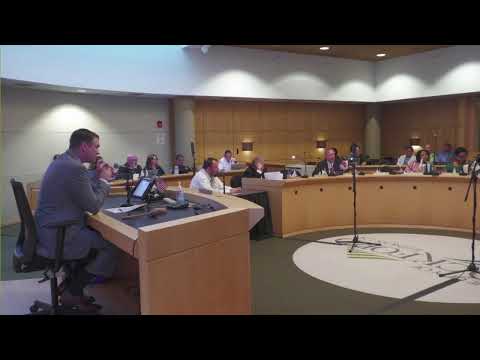
Public commenters at the June 8 meeting urged councilmembers to oppose a TIF or other approvals for a proposed data center at Camp Grant, warning of contamination risks to the Kishwaki River, "forever chemicals," and local health impacts.
Carrie Humphrey urged the council to reject development near Camp Grant, saying the site sits near "an active dump and an old dump" and the Kishwaki River, which she called "one of the cleanest rivers in the state" and a habitat for dozens of threatened plants and animals. "Imagine what building an unregulated data center near the Kish with all the ensuing air, land, water, and noise pollution they bring," she said.
Humphrey cited an EPA finding of persistent PFAS contamination near the possible site and warned that "these chemicals do not break down and cause cancer." She also raised concerns about chemical treatments in closed-loop cooling systems and the risk that leaks could introduce contaminants into soil and waterways. "Data centers are known to disregard regulations," she said, and argued the project would burden local health systems while delivering limited long-term jobs and tax benefits.
Other public speakers picked up related themes. John Tac Branley later referenced Camp Grant as a proposed location and said, "That data center, Camp Grant is where they want to put that data center at. That's a no no," citing historical and equity concerns about siting major projects in neighborhoods of color.
Councilmembers did not take a formal vote on the specific development during public comment. The topic also surfaced during committee business and will be subject to future land-use and financing review; members and staff noted environmental and regulatory questions will need written analyses and staff reports before any formal approvals are acted on.