Get Full Government Meeting Transcripts, Videos, & Alerts Forever!
Get email alerts on the Council Compensation topic
No spam. Unsubscribe anytime.
Eureka council directs staff to place charter amendment on November ballot after questions about pay reporting
Summary
After public comment raised questions about 'other pay' and benefits, the Eureka City Council voted 4–0 (one member absent) to direct staff to prepare resolutions to place a charter amendment adjusting mayor and council stipends on the Nov. 3, 2026 ballot.
EUREKA — The Eureka City Council voted to direct staff to prepare resolutions to place a charter amendment on the Nov. 3, 2026 general-election ballot that would adjust the stipend paid to the mayor and council members.
City Clerk Powell said the council was holding the second of two required public hearings on the proposed charter amendment and presented a draft ordinance to place a salary-adjustment measure before voters. “With those changes, I present to you the charter amendment, the proposed ordinance for a salary adjustment for council members to be approved by voters on the November election,” Powell said.
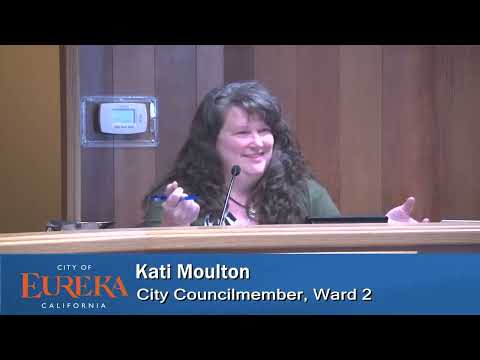
The motion, made by Councilmember Moulton, asked staff to prepare the necessary resolutions for the council’s June 16, 2026 meeting and to place the amendment on the Nov. 3, 2026 ballot. The motion was seconded (second not named) and carried on the council’s vote; the clerk announced, “Four yes votes, Council member Bower absent, motion carries.”
During the public hearing, Patrick Cloney, a member of the public, challenged the council’s repeated public characterization that the mayor and council receive only a modest stipend. He said public records compilations show larger increases in 'other pay' and benefits and urged the council to explain procedures and authority for those payments. “You all at City Hall have some explaining to do,” Cloney said, citing TransparentCalifornia.com figures and asking for definitions of what is included under benefits.
Council members and staff responded by distinguishing three parts of elected-official compensation: the regular stipend, 'other pay' (which this council recently expanded to include car allowances), and benefits such as health-insurance contributions and PERS (CalPERS) retirement contributions. Council members said year-to-year changes in the city’s health-plan rates and reinstated car allowances accounted for most of the increases referenced by the commenter.
Council members described different personal circumstances that affect how compensation appears on public-pay summaries: some members opt into city health insurance (which increases the city's reported contribution for that member), others have coverage through a spouse, and some participate in CalPERS while others do not. On the car allowance, a council member explained that the city previously provided a car allowance through the 2000s, paused after legislative confusion over AB 1234, and later reinstated the allowance after clarification of state law.
The council’s action directs staff to prepare the formal resolutions and places the process on the council calendar; it does not itself change pay. Because Eureka is a charter city, Powell noted, any change to mayor or council pay must be adopted by charter amendment and approved by the voters.
The council adjourned the special meeting and said it would reconvene shortly to discuss the budget.