Get Full Government Meeting Transcripts, Videos, & Alerts Forever!
Get email alerts on the Airports Workforce Faa topic
No spam. Unsubscribe anytime.
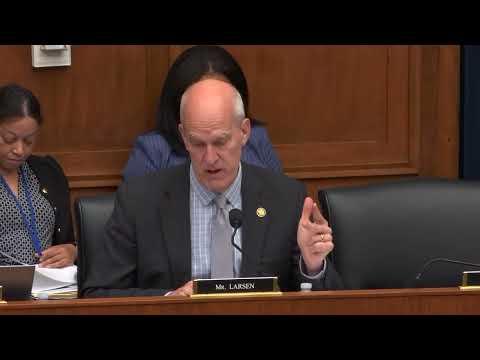
Committee member urges FAA to speed workforce grants, warns fuel prices threaten regional carriers
Summary
A committee member opened a hearing urging the FAA to quickly implement workforce and airport-improvement programs from the 2024 FAA reauthorization, citing a 2025 Airports Council International North America study on airports' economic impact and warning that rising jet fuel prices could force regional carriers to cut service to rural communities.
A committee member opened a hearing by telling witnesses that airports are vital economic engines for small and rural communities and urging the Federal Aviation Administration (FAA) to quickly implement workforce and grant programs included in the 2024 FAA reauthorization.
“Airports are vital economic engines that power our local communities, especially in small and rural ones,” the committee member said, citing a 2025 Airports Council International North America study that the speaker said found airports with commercial service support 12.8 million jobs and produce $1.8 trillion in annual output. The speaker said the reauthorization increased Airport Improvement Program funding to $4 billion annually and requires at least $150 million be spent on climate, noise or other environmental projects.
The member referenced testimony from witnesses by name, saying Mr. Collins specifically raised the need for more aviation maintenance technicians, while other witnesses (Ms. Black and Mr. Pecoraro) described competition for pilots and pressures on regional carriers. The reauthorization also, the member said, directs the FAA to develop a plan to transition away from leaded fuel in general aviation by 2030 and invests $60 million annually in aviation workforce development grants for manufacturing, maintenance and pilot training.
The speaker emphasized the risks faced by smaller regional and value carriers, saying they have fewer resources than larger airlines to absorb higher operating costs such as jet fuel. “The president needs to resolve this fuel price crisis of his own making,” the committee member said, arguing that sustained fuel-price increases could force carriers to reduce flight frequencies, eliminate routes or raise fares — outcomes that would disproportionately affect rural communities.
The committee member also urged the FAA to shore up technical expertise in its aircraft certification office so it can properly assess new regional aircraft designs and support innovation. The member asked the FAA to distribute the newly authorized grants and workforce funds in a timely manner so communities can benefit.
The remarks closed with the member saying he looked forward to hearing testimony from the day’s witnesses on ways to strengthen rural connectivity, uphold safety standards and support aviation innovation. The hearing then moved to witness testimony.