Get Full Government Meeting Transcripts, Videos, & Alerts Forever!
Get email alerts on the Land Use Development topic
No spam. Unsubscribe anytime.
Alameda planning board hearing: consultants say Main Street Neighborhood North development is "within range" but faces major infrastructure costs
Summary
City staff and consultants told the Alameda Planning Board that development north of Main Street at Alameda Point could be feasible but would require hundreds of millions in infrastructure and shoreline work, trade-offs on historic preservation, and clear priorities before issuing an RFQ for developers.
The Alameda Planning Board spent its June 8 study session reviewing a preliminary development-feasibility analysis for Main Street Neighborhood North at Alameda Point, with staff and consultants urging more policy clarity before seeking a development partner.
Nicole Franklin, Alameda Point base reuse manager, told the board the study revisits the 2017 Main Street specific plan and asks whether the city should allow greater height and density, reconsider a central park, and re-evaluate a specific-plan provision that calls for an additional 10 percent "above-moderate" housing on top of Alameda Point's 25 percent affordable requirement.
"Our vision is to create a community where generations support one another," public commenter Rose Huey said, urging the board to consider an intergenerational housing pilot that pairs low-income seniors with single mothers and children.
David Dozema of land-use firm Kaiser Mars summarized the consultant team’s topline results: backbone infrastructure and site improvements are estimated at about $176 million, and total costs that include major off‑site shoreline and levy work rise toward $240 million. The analysis tested a lower-density scenario (about 600 units east of Panama Way) and a medium-density scenario (about 1,000 units if city-owned parcels west of Panama are included). "It looks like feasibility is within reach," Dozema said, while cautioning that revenues and costs are close: consultants used roughly $1.25 million in average market-rate revenue per unit versus about $1.28 million per-unit cost (the latter figure includes developer return).
Consultants told the board that the medium-density scenario is not clearly stronger than the lower-density option because fixed costs—such as a Navy conveyance payment and East Bay MUD charges—do not scale down proportionally with per-unit revenues. They added that rehabbing and selling existing historic "big white" houses alone would not generate enough early revenue to fund a first infrastructure phase.
Board members pressed staff and consultants on several key constraints: sea-level rise and shoreline stabilization on the west side of Panama Way; a timing mismatch between where new infrastructure will be installed (the southern end) and nearer-term buildable land (the north); and the complexity of mixing new development with a contributing historic district.
Board members also discussed process questions. Several favored a competitive RFQ/RFP approach that solicits developer concepts (site plans and approaches) so the city can compare ideas and negotiate terms. Vice President Isa said staff should provide clear priorities and a menu of options so developers know where the city is open to trade-offs.
The panel debated policy levers to improve feasibility: allowing more height or density in targeted locations (board members suggested corridors near the ferry terminal and Main Street/Essex/Orion intersections), reducing operating or park requirements that raise long‑term costs, and using in‑lieu fees or other citywide funds to help meet Alameda Point’s affordable-housing obligations. Staff noted that the Alameda Point obligation (25 percent affordable) stems from a conveyance settlement and cannot be changed unilaterally by the city without renegotiation with the settlement party.
On the Navy conveyance payment, staff and a city consultant described recent renegotiation that changed the inflation index: paying at occupancy was modeled at about $75,000 per market-rate unit; if paid at conveyance the modified terms equate to roughly $34,000 per market-rate unit. Staff said the payment is triggered by built (occupied) market-rate units and that the city has an allowance of roughly 250 market-rate units before the fee applies.
Historic preservation emerged as a recurring trade-off. The historic-advisory board told staff it supports moving forward but urged clarity about which historic elements the city intends to preserve and recommended a menu of adaptive-reuse options rather than overly prescriptive rules.
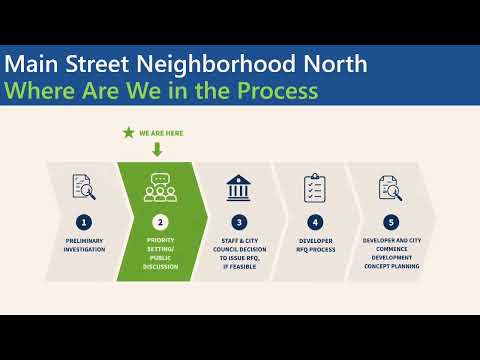
Staff closure and next steps: Nicole Franklin said staff will compile planning-board and public feedback, review feasibility assumptions as needed, and seek council direction on whether to proceed with a formal RFQ to find a developer partner. The study session closed with board members emphasizing feasibility and flexibility—staff will return to the council once priorities are refined and feasibility updated.
What’s next: staff will produce a summary of feedback and present options to the City Council before issuing any RFQ or selecting a developer.