Get Full Government Meeting Transcripts, Videos, & Alerts Forever!
Get email alerts on the Behavioral Health topic
No spam. Unsubscribe anytime.
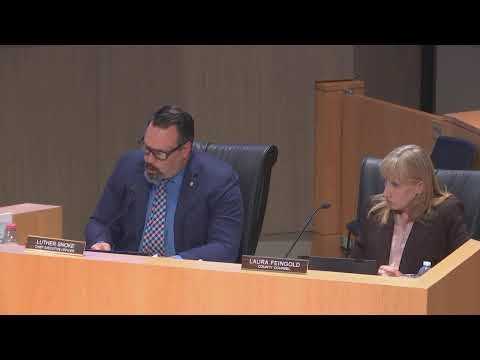
County board approves Behavioral Health Services Act integrated plan to coordinate housing, treatment and homelessness response
Summary
Supervisors approved the countyintegrated plan required by the Behavioral Health Services Act; the plan consolidates an estimated $2.34 billion in behavioral‑health investments over three years and emphasizes housing interventions, substance use services and measurable outcomes.
The San Bernardino County Board of Supervisors approved the countyBehavioral Health Services Act (BHSA) integrated plan for 2026–2029, a three‑year roadmap that aligns existing local behavioral‑health funding with new BHSA requirements focused on housing, substance‑use disorder services and outcome measurement.
Acting Behavioral Health Director Josh Dugas told the board the state has shifted Mental Health Services Act funding into a broader Behavioral Health Services Act and that the plan is intended to improve coordination and accountability. "This plan represents our roadmap for investing behavioral health resources over the next three years to improve outcomes for residents across San Bernardino County," Dugas said.
The integrated plan consolidates roughly $2.34 billion in behavioral‑health investments across three years and prioritizes housing stability, expanded access to care, whole‑person treatment and stronger outcome reporting. The state also adjusted administrative allowances, increasing the withholding percentage the county showed in planning documents, Dugas said; staff said they are coordinating with the Office of Homeless Services and Community Development and Housing to maximize infrastructure investments.
Dugas emphasized that approval from the state has been received and that implementation begins July 1, 2026. The plan includes a transition process for some providers that may not meet new BHSA requirements, with options to convert to fee‑for‑service contracts, change operations or sunset programs where appropriate.
Supervisors praised the community engagement that shaped priorities: the plan reflects input from hundreds of community meetings, focus groups and public comments. Board members also stressed measurable outcomes and reporting to ensure investments reduce homelessness, overdoses and suicide rates.
The board adopted the integrated plan and directed Behavioral Health to begin implementation, monitor outcomes and continue stakeholder engagement as services roll out.