Get Full Government Meeting Transcripts, Videos, & Alerts Forever!
Get email alerts on the County Budget topic
No spam. Unsubscribe anytime.
San Bernardino County adopts $10.9 billion 2026–27 budget with $273.7 million in new priorities
Summary
The Board approved a $10.9 billion spending plan for 2026–27 that keeps the countyon a steady fiscal path, adds $273.7 million in mostly one‑time investments for housing, public safety and youth programs, and maintains reserves for longer‑term stability.
San Bernardino County supervisors unanimously adopted a $10.9 billion recommended budget for fiscal year 2026–27 on Tuesday, approving $273.7 million in new county priorities while keeping the countyfiscally cautious amid slower revenue growth.
Matthew Ericson, the county chief financial officer, described the plan as "prudent budgeting" designed to preserve services and reserves in a slower growth environment. "Prudent budgeting means never underestimating revenues and never underestimating expenditures," Ericson said, adding that the county has positioned itself to handle economic headwinds.
The recommended budget includes targeted investments in homelessness and reentry services, capital projects and operations. Highlights noted by staff included $5 million set aside for a New Beginnings reentry campus at Glenn Helen Rehabilitation Center, $2 million ongoing for Bloomington animal shelter operations, and $77.2 million in general‑fund capital projects focused largely on public safety facilities.
Diana Aerson, assistant CFO, described the plan as effectively flat compared with the modified prior year total after accounting for one‑time revenues: "This is a steady budget. It keeps core services going, funds priority needs, and maintains our focus on long‑term stability." The recommended budget adds a net 94 budgeted positions, targeted to operational needs.
Board members praised the budget team for transparency and the multi‑month public process that included workshops and a published budget book. The board adopted the budget without any roll‑call votes recorded as opposed or abstaining.
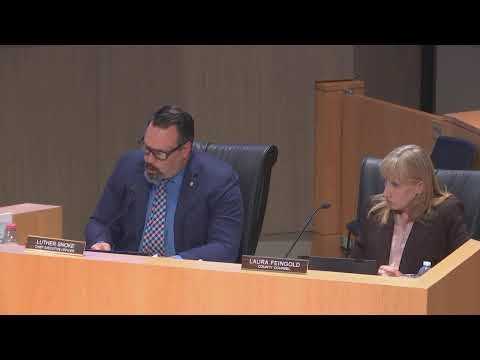
Supervisors noted long‑standing problems for small special districts and affirmed continued work on solutions such as consolidation or inter‑agency agreements to reduce volatility in utility and sewer costs for residents. Chief Executive Luther Snoke and county finance staff said they will return with implementation and monitoring reports and continue to protect policy reserves (a 20% locally funded balance target and a 5% contingency target).
The boardaction formally adopts the 2026–27 budget and directs departments to implement the plan and report regular budget-to-actual performance updates to the board.