Get Full Government Meeting Transcripts, Videos, & Alerts Forever!
Get email alerts on the Transparency topic
No spam. Unsubscribe anytime.
City attorney proposes rewrite of Milpitas ‘open government’ code to reduce duplication with state law
Summary
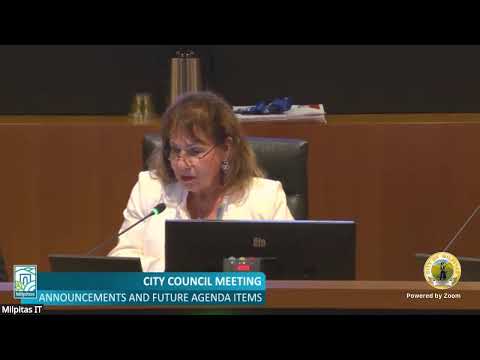
City Attorney Curtis introduced a repeal‑and‑replace of the city’s Open Government Ordinance to remove duplication with the Brown Act and Public Records Act, simplify local rules, and ‘future‑proof’ the code. The council introduced the ordinance by title and waived further reading.
The Milpitas City Council on June 9 heard from the city attorney about a proposed repeal‑and‑replace of the local Open Government Ordinance (Title 1, Chapter 3.10) designed to clarify where state law governs and to reduce locally‑maintained duplication that can lead to inconsistency.
City Attorney Curtis said the rewrite aims to make the ordinance clearer and easier to read, to avoid repeating state statutory requirements verbatim, and to remove procedural details that are better handled by administrative policy. Curtis described the drafting philosophy as “future‑proofing” the code so that routine changes to state law or internal administrative assignments will not force repeated ordinance amendments.
The proposed rewrite omits several provisions that were either duplicative of state law or difficult to administer, and it consolidates remaining local requirements so they are easier for the public and city staff to interpret. Curtis noted specific concerns about prior ordinance language that could potentially be inconsistent with state law and about a local enforcement section that would need detailed review for legal validity.
Council introduced the ordinance by title and waived additional reading. Curtis told council the draft is intended as a baseline for discussion and invited direction: the office can reinsert any provision council wants to retain or bring back alternatives where the council has policy preferences (for example, whether appeals of records requests should go to a standing “rules” committee or to the city manager).
What’s next: Staff will return with final ordinance language for adoption after council feedback; the attorney asked for guidance on several procedural points (records‑request appeals, local enforcement language, and retention policy placement) before finalizing text.