Get Full Government Meeting Transcripts, Videos, & Alerts Forever!
Get email alerts on the Responsible Bidder Ordinance topic
No spam. Unsubscribe anytime.
Mishawaka committee plans to send proposed responsible‑bidder ordinance (2025‑45) to full council for second reading
Summary
The Mishawaka Common Council public improvements committee heard presentations and public comments supporting Ordinance 2025‑45, which would codify responsible‑bidder standards for larger public works projects, including U.S. Department of Labor‑approved apprenticeship participation and a proposed $500,000 threshold; the council president said he intends to place the measure on the next council agenda for second reading.
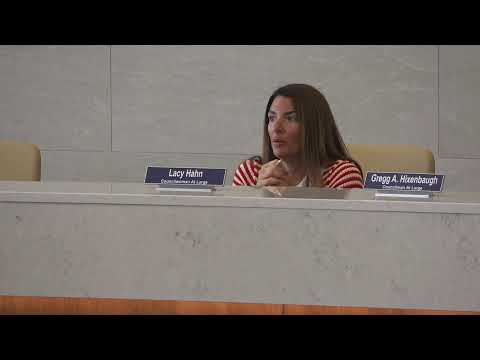
The Mishawaka Common Council public improvements committee considered Ordinance 2025‑45 on responsible bidder practices, hearing administration and outside presentations and public comment before the committee’s leadership said it intends to place the ordinance on the full council agenda for a second reading.
On behalf of the administration, Matt Lynch described the ordinance as the product of a months‑long collaborative process among the mayor’s office, council members, labor representatives and departmental staff and said the draft seeks to “protect taxpayers, ensure quality workmanship, promote accountability, and support a skilled and qualified workforce.” Lynch also said the committee removed a proposed pre‑qualification requirement after stakeholders concluded it would be burdensome and that the draft borrows language from Indiana Code as a starting point.
Marcella Kstack, a construction analyst with the Indiana‑Illinois‑Iowa Foundation for Fair Contracting, gave a detailed presentation on how responsible‑bidder ordinances (RBOs) work. Kstack said state law already requires awarding contracts to the "lowest most responsive and responsible" bidder but noted that "responsible" is not well defined. She outlined typical RBO requirements included in the draft: contractor registration, disclosure of past federal/state/local violations, proof of participation in U.S. Department of Labor–approved apprenticeship programs (including graduation metrics), drug‑testing policies, and identification of project managers and superintendents. "When you adopt a responsible bidder ordinance, it removes the ‘may’ and it requires a contractor to meet the objective criteria set under the bid submission requirements," Kstack said.
A resident, Mike Lita, spoke in support of the ordinance during public comment and urged the city to codify standards so future administrations continue to apply them. Lita cited a $500,000 contract threshold in the draft that he said would exempt smaller, rapid‑response projects.
An additional presenter emphasized workforce development benefits of apprenticeship programs cited in the draft, describing typical apprenticeship training as involving roughly 6,000 on‑the‑job hours and annual classroom instruction and noting program outcomes discussed in the presentation, including an average apprentice income figure and high rates of private health insurance and retirement access among program graduates.
Committee members noted that similar ordinances are already in use across Indiana — the presenter said 71 communities have adopted RBOs — and named nearby examples including Elkhart, LaPorte, Michigan City, South Bend and St. Joseph County. Several council members thanked staff, labor partners and others for the collaborative drafting process and emphasized the goal of preserving opportunities for contractors who have performed responsibly for the city.
As a next step, the council president said his intent was to place Ordinance 2025‑45 on the next full council meeting agenda for a second reading, with ongoing review and the option for future tweaks once implemented. No formal vote on the ordinance occurred at the committee meeting. The committee adjourned following the discussion.