Get Full Government Meeting Transcripts, Videos, & Alerts Forever!
Get email alerts on the Housing Rehab topic
No spam. Unsubscribe anytime.
Palatka CRA advances framework for residential rehab pilot to address blight
Summary
The City of Palatka CRA reviewed a proposed residential rehabilitation assistance pilot aimed at stabilizing owner-occupied properties with verified health-and-safety or code deficiencies. Staff proposed $15,000 maximum per property and a $150,000 pilot budget; commissioners asked for tighter eligibility and oversight rules.
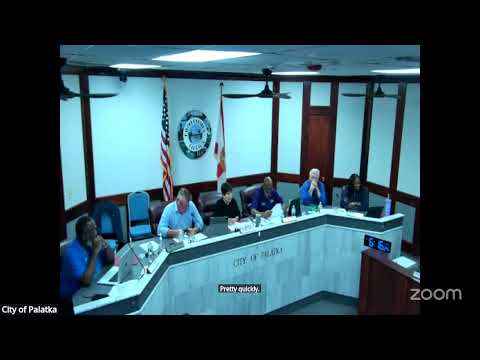
CRA staff presented a draft residential rehabilitation assistance pilot during the City of Palatka Community Redevelopment Agency’s June 10 budget workshop, describing the program’s goal as stabilizing owner-occupied properties with verified health-and-safety and code deficiencies to prevent neighborhood decline and reduce blight.
The staff presentation said eligible work would include corrective measures such as electrical repairs, plumbing fixes, HVAC repairs or replacement when necessary for health, targeted roof repairs for stabilization, and other structural or safety-related corrective work. The proposal used the area median income (AMI) thresholds as an example for eligibility: a one-person household example of $43,850 and a two-person household example of $50,000 (2026 AMI-based figures were presented as illustrative).
Staff offered an example cap of $15,000 maximum assistance per property and described a $150,000 pilot budget, which staff estimated could assist roughly six to 10 households depending on repair costs. Staff emphasized the pilot format was intended to be adjusted based on feedback and that parameters such as repeat eligibility, homestead requirements and payback/lien mechanics would need to be defined in the final program rules.
Commissioners pressed for clearer qualifiers and oversight. One commissioner asked whether applicants would need to show documented health conditions to qualify for HVAC assistance; staff answered that HVAC would be eligible when necessary to address documented habitability or health-and-safety concerns. Another questioned whether the program should follow HUD-based AMI limits, observing that HUD thresholds may exclude local residents who nonetheless face financial hardship; staff said AMI was a point of reference but that qualifiers could be tweaked.
On program controls, staff said assistance would be disbursed directly to contractors rather than to applicants, and recommended recording a lien or promissory note to trigger repayment or prorated payback if a property is sold outside the family within a set period. Commissioners asked staff to return with specific language about frequency of awards (for example, once every three years), lien enforcement, monitoring and an administration plan to check continued ownership where required.
Several commissioners expressed support for refining the program and returning with a pilot-ready draft. No final action or vote was taken; commissioners directed staff to revise eligibility criteria, clarify payback and lien procedures, and outline oversight and long-term program management for a future meeting or workshop.