Get Full Government Meeting Transcripts, Videos, & Alerts Forever!
Get email alerts on the Bike Ped Safety topic
No spam. Unsubscribe anytime.
Whitefish Bay hears bike-and-pedestrian safety study; board to consider adoption in April
Summary
Village staff and consultants presented a villagewide bicycle and pedestrian safety study that identified high-risk locations (notably Lake Drive), found 68 vulnerable-road-user crashes in 10 years (including two fatal crashes), and recommended short-term temporary fixes and long-term infrastructure changes. The board will consider adopting the study at its April meeting and has $200,000 budgeted for initial work.
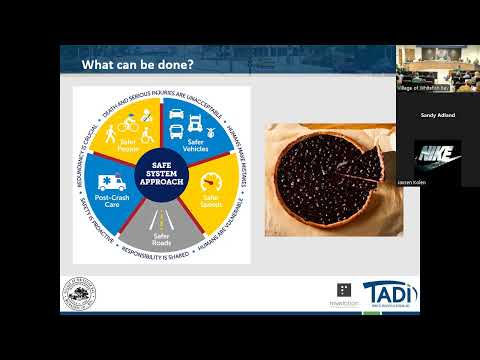
Whitefish Bay village staff and a consultant team presented a villagewide bicycle and pedestrian safety study and told the Village Board on March 17 that the draft lays out short-term, temporary measures and longer-term infrastructure projects to reduce pedestrian and bicycle injuries.
At a public presentation, consultant John Campbell described the study’s public-engagement methods, video- and field-based observations, and crash analysis. He said the analysis found 68 crashes involving pedestrians or bicyclists over the past 10 years, including two fatal crashes and several serious injuries, and that 52 of those crashes occurred at intersections. "We want to have zero serious injuries and fatalities on Whitefish Bay roads," the presenter said.
The study combined a three-meeting public outreach process, an online map-based survey with more than 1,000 respondents (81% reported feeling comfortable or very comfortable walking in the village), high-definition intersection video, and a risk-scoring model that highlights higher-risk crossings and corridors. Lake Drive, several Silver Spring / Hampton intersections and Santa Monica / Lancaster locations were flagged as higher-risk in the consultant’s maps.
Recommendations are organized into three tiers. Short-term, low-cost options the consultants urged the village to try this year include temporary curb extensions (bump-outs), Gateway treatments to cue drivers entering the village, painted or experimental crosswalk treatments, rectangular rapid-flashing beacons (RRFBs) at specific crossings, improved intersection sight lines and targeted signing and pavement markings. Long-term infrastructure proposals include permanent curb extensions, redesigned intersections, pedestrian plazas (one concept would close Kimbark near the high school for a plaza) and protected bicycle facilities on key corridors.
The report also urges non-infrastructure steps: targeted safety education for younger drivers and students (the data showed a spike in vulnerable-road-user crashes for ages roughly 10–19), continued law-enforcement speed and failure-to-yield enforcement, and coordination with neighboring communities and Milwaukee County for consistent treatments on roadways that cross municipal lines.
Staff said adoption of the study will be on the board agenda the first Monday in April and that the village’s adopted 2025 budget includes $200,000 to support short-term improvements. Village staff said a task list and spreadsheet will be developed for Public Works to prioritize and recommend how to expend that funding. Consultant materials and an appendix with the risk-scoring formula will be shared with trustees on request.
The presentation drew questions from trustees about how to interpret the raw crash count and how the risk model weights traffic volume, crossing distance and speed; the consultant said the model is documented in the report appendix and agreed to provide comparison dashboards for neighboring communities.
The board did not adopt the study that night; it will consider formal adoption in April following this feedback and the Public Works committee prioritization.