Get Full Government Meeting Transcripts, Videos, & Alerts Forever!
Get email alerts on the Water Infrastructure topic
No spam. Unsubscribe anytime.
Whitefish Bay board begins planning decades-long water-main and lead service line replacement program
Summary
Village staff outlined a long-term plan to replace aging water mains and lead service lines, proposing about one mile of main replacement per year and planning to identify unknown service materials before regulatory deadlines; board gave conceptual direction and asked staff to finalize CIP and financing options ahead of possible 2027 rule deadlines.
Village staff presented a multi-year strategy for replacing aging water mains and lead service lines at the February 17 village board meeting, asking trustees for conceptual direction on a program that could run decades.
The presentation, led by Matthew and Tom Zulich, laid out the core problem: the village has roughly 47 miles of water main, with about 40 miles installed before 1941 (described in the presentation as roughly 86% of mains past their useful life). Staff said regulatory uncertainty complicates planning because the Environmental Protection Agency’s recent lead/copper revisions are under congressional review and portions have been challenged in court by the American Water Works Association. “It’s pretty much as clear as mud right now,” Tom said, summarizing regulatory uncertainty.
Why it matters: staff recommended a baseline utility program that would replace about one mile of main per year (roughly eight to nine municipal blocks) and prioritize replacing public-side lead service lines within those project areas to avoid repeated digging. To meet targets embedded in current federal proposals, staff said the village would need to be prepared to replace roughly 200–230 lead service lines per year if the more aggressive timetable is required; unknowns in the village inventory (staff reported about 1,388 suspected or unknown public-side service materials) could push the planning horizon from about 11 years to longer, depending on how many of those unknowns are confirmed as lead.
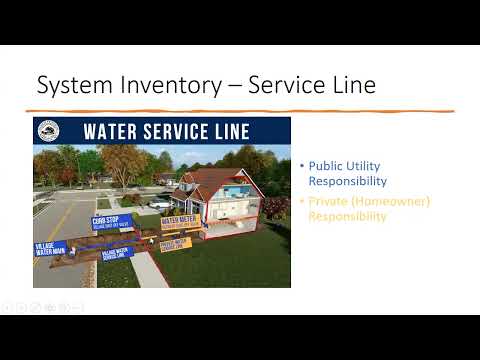
Money and options: staff presented ballpark cost estimates and financing approaches. Construction of one project-mile of main replacement was described at a conservative $3.4 million estimate in the briefing; public-side service-line replacements were estimated at roughly $8,000 per line. For the private-side replacement responsibility, staff reviewed options including a municipality-run loan via special assessment, pursuing the Public Service Commission (PSC) private LSL grant program (which would require a mandatory replacement ordinance and an estimated $910,000 in annual revenue collection to support a 50% grant to homeowners), and state or federal low-interest borrowing programs. Staff emphasized that numbers were preliminary and would be refined in the five-year CIP and long-range fiscal plan.
Trustees pressed staff on sequencing, resident impacts and whether the village should pause routine mill-and-overlay pavement work in areas slated for deep utility work. Staff encouraged coordination to avoid repaving recently completed streets and advocated for integrating road condition scores, traffic-safety priorities and other utilities into project selection.
Next steps: staff asked for board direction to use the one-mile-per-year baseline as a planning target, to continue discovery (including potholing or other permitted methods to classify unknown services), to prepare a five-year CIP and financial strategy and to return with refined cost and funding options before regulatory decision points in 2027 and implementation steps in 2028.