Get email alerts on the Budget And Finance topic
No spam. Unsubscribe anytime.
Patrick County adopts 20% reserve policy, sets debt limits after Davenport presentation
Summary
The Patrick County Board of Supervisors voted unanimously to adopt new financial policies that set a 20% minimum unassigned fund balance, create a 2.5% budget stabilization fund and set debt limits including a 3.25% debt-to-assessed-value cap and a 10% debt-service cap.
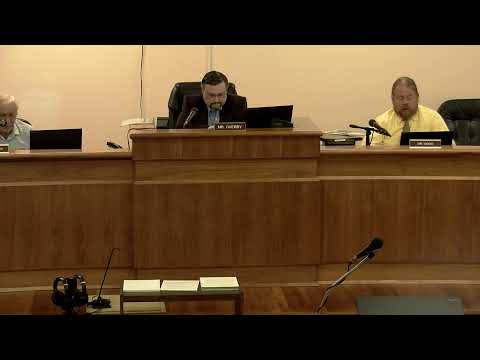
The Patrick County Board of Supervisors voted unanimously June 8 to adopt a package of financial policies that set clearer reserves and debt limits for the county as it approaches the new fiscal year.
Austin Saxs, the county's financial adviser from Davenport, presented the recommendations and peer comparisons before the vote. Saxs told the board that the county’s unassigned fund balance has been above 20% of the budget for the past five years and that in fiscal 2025 that equated to about $19 million. “Unassigned fund balance we are recommending a policy of a minimum policy of 20%,” Saxs said, adding the recommendation includes a separate budget-stabilization fund funded at about 2.5% and a capital reserve for one-time priorities.
The presentation reviewed historical fund-balance trends, instances where the county previously drew reserves or used a revenue anticipation note, and the county’s current strong position after several years of structural balance. Saxs also reviewed the county’s debt profile, saying annual debt service is roughly $2.6–$2.7 million and that the county’s 10-year payout ratio is about 70 percent — meaning the county will have repaid about 70% of principal over the next decade.
As part of the policy package, Davenport recommended a not-to-exceed 3.25% debt-to-assessed-value limit and a not-to-exceed 10% debt-service-to-expenditures limit. Davenport illustrated that, under sample terms (20-year repayment and 5% interest), the county could remain within the policy and still have theoretical debt capacity on the order of $50–$52 million, while emphasizing debt affordability as a practical limit that would require coordination with county staff before any borrowing.
Supervisor roll call recorded all members voting to adopt the policies. The board’s action takes effect as part of the county’s fiscal-year planning ahead of July 1.
AI generated
The text on this page is AI generated. Summaries, highlights, analysis, and video transcripts are all produced from the original source material.
AI can make mistakes, so if you spot one, and we will fix it for everyone.
Note: the source content is unaltered by us. Any content source we link to, be it a video, an audio recording, or a document, is presented exactly as its publisher released it. That publisher is usually a government body, sometimes an individual official or another organisation.