Get Full Government Meeting Transcripts, Videos, & Alerts Forever!
Get email alerts on the Bonds And Infrastructure topic
No spam. Unsubscribe anytime.
Candidate criticizes repeated bonding, school bond failures and calls for fiscal restraint
Summary
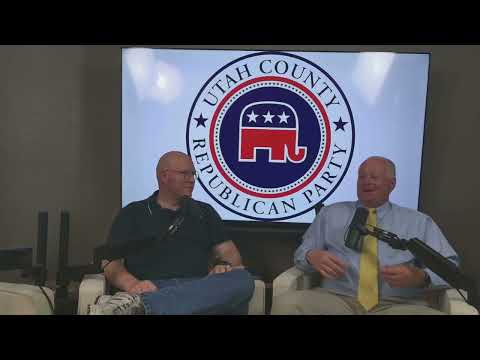
David Spencer used the Utah County Republican Party podcast to criticize repeated municipal and school district bonding and long-term debt (he cited a $116 million fiber debt and a rejected $600 million school bond), and called for staging projects and staying within means rather than layering bonds and taxes.
David Spencer told the Utah County Republican Party podcast he favors a restrained, staged approach to public projects over repeated large bonds and long-term debt. He criticized what he described as a cycle of bonding and tax increases that he said can push fixed-income residents out of their homes and raise costs for businesses.
"You kick the can down the road for another 20, 30 years," Spencer said of large bonds. He pointed to a failed $600 million school bond — which he said was far larger than would have been more acceptable to voters — and described his opposition to what he labeled "get-rich-quick" public projects. He also cited Utopia (the municipal fiber effort in the transcript) as an example of a public project that left long-term debt — Spencer referenced $116 million in debt and said residents are paying about $3.5 million per year through 2040.
On municipal projects, Spencer advocated staging construction and seeking private-sector alternatives where feasible. He described Orem’s staged city-center construction as an example of managing cost growth without immediate new taxes. "If you can get in the private sector, government needs to stay out of that business," he said, arguing government should not be the default developer where private options exist.
Spencer said he would push for fair procurement and a competitive RFP process so contracts do not consistently go to the same firms. He also warned against bond structures (including lease-revenue workarounds) that can effectively bypass voters’ decisions.
The podcast discussion framed these remarks as candidate positions and policy preferences; Spencer did not announce formal proposals tied to specific county ordinances or budgets during the interview.