Get Full Government Meeting Transcripts, Videos, & Alerts Forever!
Get email alerts on the Campaign topic
No spam. Unsubscribe anytime.
Phil Lyman frames CD‑3 run around public lands, water and 'transparency'
Summary
Former San Juan County commissioner Phil Lyman said he is running for the new U.S. House seat covering Utah’s CD‑3 to press state authority over federal lands, prioritize water policy and push for ‘transparency’ in government. He positioned himself to the right of his primary opponent and said local counties should manage land and water decisions.
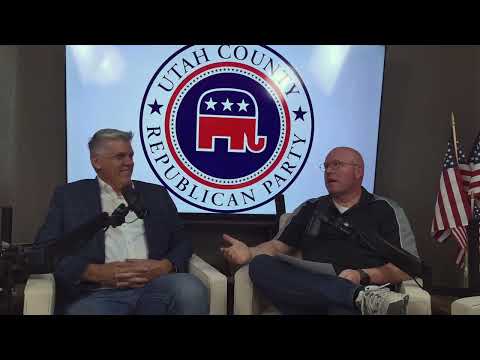
Phil Lyman, a former county commissioner and state legislator, said he is running for Congress in Utah’s newly drawn 3rd Congressional District to press state jurisdiction over federal land, tackle water shortages and restore what he called “transparency” in government.
“Transparency is the tagline of my campaign,” Lyman said, adding that his county and legislative experience give him firsthand knowledge of the competing demands in a large rural district. He described CD‑3 as geographically huge and packed with federal lands, minerals and water‑management conflicts. “If you control the water, you control everything,” he said.
Lyman criticized what he called judicial overreach in the redistricting process and said the legislature did not push back decisively when a judge favored a public map over the legislature’s plan. He described the new CD‑3 as “uber conservative” and spanning some 18 counties from the Wyoming border down to Arizona and west to Nevada.
On public lands, Lyman said federal ownership does not eliminate state jurisdiction and advocated empowering counties and local water districts rather than centralizing control. “You’ve got your county water commissions, your conservancy districts — empower those,” he said, urging that local officials with generational knowledge be given more authority to manage resources.
Water is central to his platform. Lyman criticized state and nonprofit buyouts of water rights, arguing those programs can shift leverage to developers and do not necessarily save the Great Salt Lake. He said Utah should pursue alternatives — including desalination and small modular nuclear power to support new infrastructure — while renegotiating downstream obligations under interstate compacts.
Lyman also said he would seek caucus membership in Washington that aligns with his priorities. “The Freedom Caucus — their loyalties are to the Constitution and to their constituents,” he said, adding that caucus membership can provide leverage inside a 435‑member House.
The candidate framed his approach as practical and experience‑driven: “Go back there with some sound logic, some boots on the ground experience,” he said. Lyman said he plans multiple district offices and county liaisons across the 51,000‑square‑mile seat to remain connected with constituents.
Lyman provided his campaign contact as Lyman4Utah.com and said his phone number is available for direct constituent outreach. The primary contest is expected to continue; Lyman said he will participate in further interviews and debates before voters make their choice.