Get Full Government Meeting Transcripts, Videos, & Alerts Forever!
Get email alerts on the Curriculum Videos topic
No spam. Unsubscribe anytime.
Marian County board hears heated public debate over proposed fetal‑development videos, schedules workshop
Summary
At a June 9 school board meeting, eight speakers sharply disagreed over whether Marian County schools should pursue state approval to use Live Action “Baby Olivia/Oliver” fetal‑development videos as supplemental classroom material; the board asked the superintendent to place the item on a future work session so members can view the videos and discuss policy.
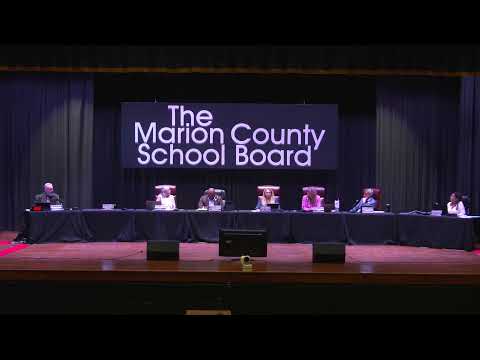
Dozens of residents filled the Marian County Public Schools auditorium on June 9 as eight public speakers urged the school board either to adopt or reject a pair of fetal‑development videos being promoted as supplemental curriculum.
Deborah Daniels, a retired teacher, told the board she opposed the videos and described them as “political, inflammatory and discredited,” saying the productions and their sponsors have been removed from social platforms for spreading “conspiracies and disinformation.”
“Live Action’s videos have no business being a part of any curriculum in our Marian County schools,” Daniels said.
Supporters argued the videos show medically accurate fetal development and belong in classrooms as a science resource. Amber Ponudo urged the board to request state approval to use the material for grades 6–12, citing other states and districts that have done so.
“These videos show fetal development from conception through birth,” Ponudo said. “This is science. Children have a right to know how we came into this world.”
Speakers on both sides referenced state legislative action. Several noted that a bill requiring similar videos passed the Florida House but stalled in the Senate in recent years, while others said districts may request Department of Education approval to use such materials. Andrea Thorne, a community leader, quoted Superintendent Brewer’s earlier response — “At this time, we are not moving forward with any additional curriculum beyond our approved standards” — and asked the board to reconsider whether that statement accurately described the district’s discretion to evaluate supplemental materials.
Board members thanked speakers and said they had received many emails on the subject. Chair James and several members agreed the issue—because it would bring a specific video into classrooms—belongs at the superintendent’s discretion but also requires board discussion. The board asked staff to place a public work‑session agenda item in the near future so members can view the videos, hear community perspective, and discuss options such as opt‑in/opt‑out procedures.
No formal board action was taken on the videos at the June 9 meeting. The board’s next steps, as stated during the meeting, are to schedule a work session where the video and the district’s legal/operational options can be reviewed publicly.
The public‑comment exchange occurred near the end of the meeting after the board had voted on several consent and construction items. The hearing was notable for its partisan tenor and repeated references to state statute and Department of Education procedures; it prompted board members to request fuller public discussion before any administrative decision affecting classroom instruction.