Get Full Government Meeting Transcripts, Videos, & Alerts Forever!
Get email alerts on the Land Use topic
No spam. Unsubscribe anytime.
Roxboro council continues decision on Gregory Street triplex after neighbors raise drainage, sewer and parking concerns
Summary
Council continued a contested special-use permit for a proposed triplex at 126–134 Gregory Street to July 14 after neighbors and staff flagged drainage, sewer capacity and access issues; staff said no certificate of occupancy would be issued until the western sewer project increases system capacity.
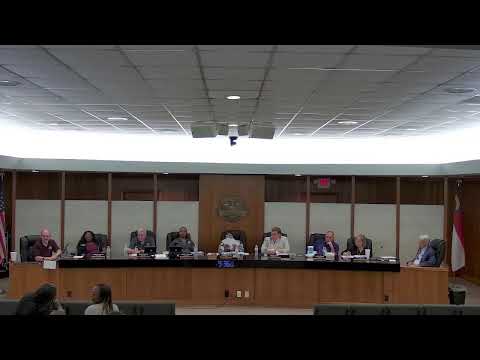
The Roxboro City Council on Tuesday continued a public hearing on a special-use permit for a three-unit building on Gregory Street after several neighbors testified about long-running drainage problems, sewer backups and tight street parking.
Planning staff opened the quasi-judicial hearing and summarized the application as a 32-by-51.33-foot triplex with three addresses (126–134 Gregory Street), a seven-space parking lot shown on the site plan and vegetative buffers where utility easements allow. The staff report recommended conditions including paving the parking area, recording a 20-foot sewer easement on a recombination plat and completing all building inspections and fire-code requirements prior to certificate of occupancy. "There shall be no certificate of occupancy issued for the project until such time as the western sewer project is complete as there is not sufficient sewer capacity for the additional dwelling units," staff said.
Neighbors told the council the site conditions differ from how the project appears on paper. "Looks good on paper, but we live there and know what it is," longtime Gregory Street resident Denise Gilland said, citing chronic drainage, standing water and sewer odors. Gilland described a longstanding drainage pipe and marshy low area behind properties and said prior sewer backups and narrow roadways make additional units and visitors a community concern.
Other residents warned that construction traffic could worsen erosion and that the road has a six-ton limit sign that is not currently posted. Chris Carlson said recent stormwater work elsewhere increased flow into a ditch adjacent to his property and that embankments are beginning to slough.
City public-works staff explained that the western sewer project will divert roughly half the flow currently conveyed through the Marlo Creek outfall via a new force main and bypass — work staff said is expected in late 2026 or early 2027 — and that the diversion is intended to relieve sewer capacity constraints and reduce backups in the neighborhood.
The applicant’s contractor described the project as a small triplex with three two-bedroom units of about 1,024 square feet each and said the owner does not plan additional development on the rear acreage. Staff acknowledged outstanding application materials and said a water/fire-flow analysis had been completed but that some of the applicant’s submitted findings were still marked as “working on.”
Council members debated whether drainage complaints required a technical engineer analysis and noted they must base a zoning decision on the eight findings of fact in the ordinance. Several members said the application lacked some of the detailed engineering or survey supplements they expect and asked the applicant to bring the civil engineer and surveyor to the next hearing. The council voted 4–1 to continue the public hearing to July 14 and asked staff to circulate any supplemental materials in advance so council and the public could review them.
The council’s continuation leaves the record open for the applicant to provide revised site plans, the recorded recombination plat and any civil-engineering documentation requested by staff. Staff emphasized that, even if zoning approval is granted, no certificate of occupancy will be issued until the western sewer capacity issue is resolved.
What happens next: The council continued the public hearing to July 14 and directed the applicant to submit requested supplemental materials at least the Tuesday before the meeting so staff and council can review them.