Get Full Government Meeting Transcripts, Videos, & Alerts Forever!
Get email alerts on the Speed Limits topic
No spam. Unsubscribe anytime.
Moab council adopts new process for setting speed limits but tables specific speed changes after public debate
Summary
The council approved Ordinance 2026‑12 to standardize how the city sets speed limits, including a 20 mph prima facie default when no sign is posted, but voted to table specific proposed speed‑limit changes (including proposals affecting UTV/OBV limits) for workshops and more public engagement.
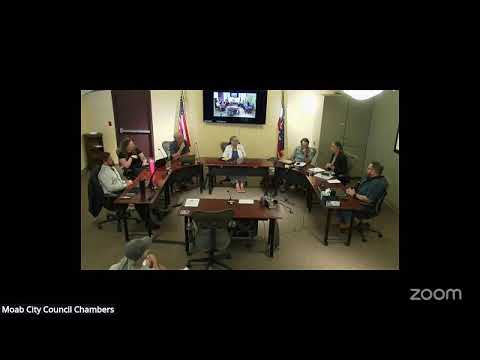
The Moab City Council on June 9 adopted Ordinance 2026‑12, a measure that creates a uniform process for establishing speed limits within city limits but does not itself change posted speeds. Council members said the ordinance was needed to align local code with recent changes in Utah law and to create a clearer, enforceable method for evaluating speed limits.
The ordinance establishes the method by which city staff and the council will study, post and enforce speed limits and specifies a prima facie default speed of 20 mph where no regulatory sign is posted. Lex, a staff presenter, told the council the change ‘‘does not change any of the speed limits within the town’’ but gives the city a consistent framework to set and defend limits going forward.
Council debate on the ordinance was brief; members praised the clarity it provides. ‘‘This helps give clarity on definitions that we can use,’’ one councilor said. The council approved the ordinance by voice vote.
Immediately after adopting the ordinance, the council considered a separate agenda item proposing targeted speed reductions across several corridors, including lowering Mil Creek and portions of Fourth East to 20 mph and keeping certain bypass routes at 25 mph to preserve emergency routing. Presenters Levi and Lex said recommendations were refined after feedback and field review; they recommended leaving major bypasses such as Fifth West/Cane Creek and First North/ Fourth East at 25 mph so emergency traffic could move around downtown when needed.
Public commenters and several council members raised tradeoffs between noise mitigation, cyclist safety and enforcement capacity. Several residents advocated retaining lower 15 mph limits for street‑legal all‑terrain or off‑highway vehicles (OBVs/UTVs) as a noise‑mitigation tool, while some councilors emphasized the potential for differential speed environments to create unsafe passing conditions for cyclists.
Following extended discussion, Councilor Colin moved — and Councilor Miles seconded — a motion to table the specific speed‑limit changes and pursue a public workshop process. The motion passed unanimously. Mayor Joette Langanesees and staff said the council will coordinate community outreach (including reports from the Safe Streets for All work) and aim to return to the council with proposals and community feedback later this summer or early fall.
Next steps: the council directed staff to plan community workshops and to coordinate with consultants and the Safe Streets for All effort before bringing specific posting changes back for a council vote. Until then, existing posted speed limits remain in effect.