Get Full Government Meeting Transcripts, Videos, & Alerts Forever!
Get email alerts on the HB2299 topic
No spam. Unsubscribe anytime.
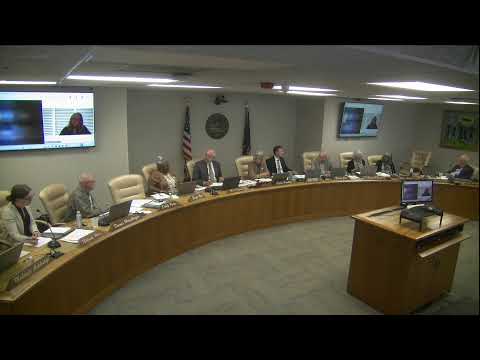
Kansas board maps operational role for new law banning student phone use; staff propose certification survey
Summary
Board members reviewed House Bill 2299 (limits on personal electronic devices and social media use in schools) and HB 2513 (student walkouts). KSDE proposed a short certification survey for districts to confirm policies by Sept. 1, 2026 and a complaint/adjudication process for walkouts; the board requested more details and draft forms.
TOPEKA — A pair of recently enacted state laws prompted a lengthy board discussion on June 9 about how schools will implement and how the Kansas State Department of Education will collect compliance assurances.
House Bill 2299 requires every school district and any accredited non‑public school to adopt policies prohibiting personal electronic device use during the school day (devices must be powered off, securely stored, and not on the student’s person in an inaccessible location) and limiting staff‑student social media contacts to official, defined uses. The law also prohibits requiring students to use social media for assignments.
KSDE staff told the board the law directs districts and accredited non‑publics to adopt a compliant policy on or before Sept. 1, 2026 and to “certify” to the state board that they have done so. The department proposed sending a short online certification survey to each superintendent or governing authority asking them to verify that the local board adopted a compliant policy; KSDE said it would not review or approve individual local policies, just collect the certificate of adoption as the statute requires.
Board members pressed staff on whether KSDE will interpret policy language, how enforcement works at the local level, exemptions for students with IEPs/504 plans or health plans, and the operational cost of making phones “inaccessible.” KSDE said districts can adopt more restrictive rules (it has no explicit staff‑use directive in the statute) and that the law provides exemptions for students with individualized plans.
Also before the board was a budget‑proviso measure (House Bill 2513) that directs KSDE to establish a complaint process and potential penalties for districts where students organized an unexcused walkout and staff encouraged, facilitated or enabled that action. The proposed penalty in statute is a fine equal to the superintendent’s contract salary for each school day affected, and the statute requires KSDE to adjudicate complaints. KSDE proposed a complaint form, delegation of initial investigation to the Office of General Counsel and final action by the board.
Board members asked whether a defined numeric threshold (how many students constitute a walkout), whether staff supervision to protect safety during a walkout could be construed as facilitation, and whether insurance or other unintended consequences were considered. KSDE said the statute defines walkouts broadly as organized willful violations of attendance, that all three conditions in the statute (lack of parental consent, failure to enforce attendance policy and staff encouragement/facilitation) must be true for a penalty, and that further guidance or statutorily directed clarifications could be considered in a trailer bill.
What’s next: KSDE will prepare the proposed short certification survey and the example complaint form and return to the board with draft language; districts must certify compliance by Sept. 1, 2026 under the law.