Get Full Government Meeting Transcripts, Videos, & Alerts Forever!
Get email alerts on the Short Term Rentals topic
No spam. Unsubscribe anytime.
Glendale bans rentals under seven days, limits mid-length stays and raises rental tax
Summary
The Glendale Common Council adopted an ordinance banning residential rentals of six nights or fewer, capped rentals of 7–30 days to 180 nights per year, and raised the city's short-term rental tax from 7% to 8% to fund enforcement and administration.
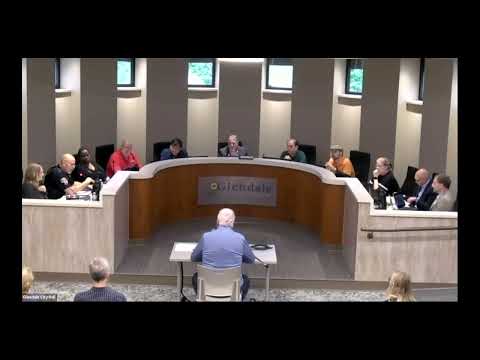
The Glendale Common Council on June 11 adopted a package of rules aimed at curbing unruly short-term rentals, voting 4'to'2 to ban residential rentals of six nights or fewer and to impose new restrictions and fees on rentals of seven to 30 days.
The ordinance bars rentals of six nights or less and allows rentals of seven to 30 days only under a new licensing and enforcement framework that includes a maximum of 180 rental nights in any 365-day period, proof of liability insurance and a 24/7 local emergency contact who can respond in person to problems at the property, officials said. The council also approved raising the tax on residential dwelling rentals from 7% to 8% to cover the city's added administration and enforcement costs.
Mayor Kennedy framed the package as the strongest approach the city can take under current state law. "We're going to make sure that that what we can do, everything that we're allowed to do under the state is what we're doing in tonight's ordinance," the mayor said.
City staff explained how the rules will be enforced in partnership with the Northshore Health Department. The city attorney and administrator said properties that have a history of nuisance calls or prior unlicensed rentals can be flagged during the health-department licensing review and denied permits. Staff also described plans to procure specialized monitoring software—coordinated across Northshore communities—to help identify listings that appear to be operating without permits.
Chief Fugman described the police role in enforcement and emphasized resource constraints. "We own our data [from our license-plate camera provider]," the chief said. "It's a 30-day hard retention period. We do not share [by default] with federal agencies, and we do not use facial recognition; it's plate-area imagery only." He added that extra patrols would be used where problems are reported.
Residents who spoke at the meeting urged the council to act. "Cars are whipping through, running through stop signs, going too fast," said Kaplan Flanigan, a longtime resident of North Ames Terrace who called for more enforcement around neighborhood cut-through traffic. Several neighbors recounted late-night parties, repeated police calls, and continuing strains on local officers.
Not all stakeholders supported the tighter rules. Becca Petrello, president and CEO of Discover the Northshore (the regional tourism entity), warned that a strict minimum-stay rule could reduce short-stay tourism and hotel-tax revenue. "I do fear we will miss out on a lot of hotel tax dollars coming from those Airbnbs if we do limit it to 7 days," she said; staff said many of the currently operating short-term listings did not have city permits and therefore were not contributing to hotel-tax receipts.
Penalties and practical details: staff said the city would seek the maximum fines allowed when properties violate the law. The city attorney noted the city can impose civil penalties for continuing violations; the health department has already assessed a $960 state fine against the operator of 1030 Riverview for operating without a license. City fines under the proposed local code could be as high as $1,500 per day as a continuing violation, staff added.
What happens next: The ordinance becomes part of the city code immediately after the formal adoption process and will be implemented through coordinated work between the city clerk's office, police, the city administrator's office and the Northshore Health Department. Council members and staff said they expect enforcement to focus first on properties that have generated repeated police or health complaints and on listings found operating without licenses.
The council vote: The council approved the ordinance in a roll call recorded as 4 in favor and 2 opposed.