Get Full Government Meeting Transcripts, Videos, & Alerts Forever!
Get email alerts on the Local News Sustainability topic
No spam. Unsubscribe anytime.
Missoula panelists outline the challenges — and experiments — to sustain local news
Summary
At a Missoula City Club forum, Matthew Frank of The Pulp and Eric Whitney of NPR described how community support, new nonprofit startups, platform competition and AI shape local journalism. Panelists and audience members discussed funding ethics, distribution losses to tech platforms, and options for rural news deserts.
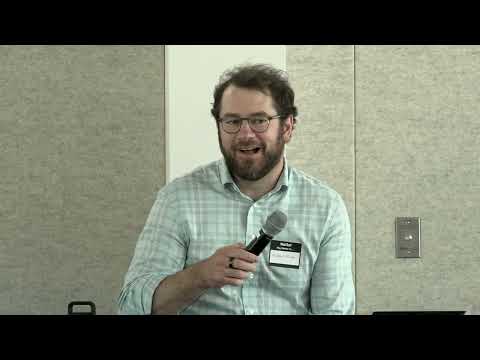
Missoula — Matthew Frank, co‑founder and publisher of The Pulp, and Eric Whitney, senior editor at NPR and bureau chief for the Rocky Mountains and Great Plains, told a City Club audience on a June forum that local news remains vital but faces severe structural challenges.
Frank, who launched The Pulp in September 2023, said independent and nonprofit experiments are emerging to fill gaps left by traditional papers. “Since we launched we have more than 1,300 donors across the community and more than 500 readers donate every single month,” Frank said, describing a donor‑driven nonprofit model that combines newsletters, sponsorships and a planned quarterly print edition with an eventual goal of monthly publication.
The panel foregrounded the scale of change. Frank cited a recent Medill State of Local News estimate that about 136 newspapers closed in the preceding year and noted a Pew survey showing strong trust in local news; he and Whitney said audience habits are shifting rapidly toward social media as a source of local information.
Whitney, who described his work with NPR member stations across nine states, placed local startups in the broader public‑radio ecosystem and warned that public broadcasters are also under pressure. “Montana Public Radio has 11% less of its annual budget as a result of that,” Whitney said, referring to federal funding changes that, he said, have reduced some stations' ability to pay for national programming and support local reporting.
Audience members pressed panelists on practical issues. Mary Mo asked why promising outlets do not combine forces to cover daily community news; panelists said syndication and content‑sharing occur in some cases but differences in mission, paywalls and business models complicate full mergers. Emily asked whether platforms such as Apple, Google and YouTube are siphoning off ad revenue and attention; Whitney said platforms capture a large share of advertising dollars and audience attention, making independent distribution difficult, and urged outlets to build owned channels (newsletters, websites) even as they maintain selective presence on social platforms.
Concerns about AI, funding and ethics drew sustained discussion. Lucy Biggley asked about AI’s role; Frank said The Pulp uses AI for operational tasks but “we do not produce any Pulp content with AI, for sure,” and Whitney described NPR’s publicly available ethics handbook and said on‑air content is not AI‑generated under current policies. Phil asked about inappropriate funders; Frank said The Pulp follows Institute for Nonprofit News guidance (for example, limiting anonymous major gifts), and Whitney reiterated that public radio rejects quid pro quo arrangements and discloses major underwriters when appropriate.
Panelists also addressed rural news deserts. Jim Strauss noted the recent closure of Anaconda’s longstanding paper and an increase in counties without local outlets; Frank said The Pulp hopes to package tools and coaching to help smaller communities, while Whitney said local advertising economics often determine viability and that public radio can struggle to serve the smallest markets.
The forum closed with a reminder that sustaining local news relies on a combination of community support, diverse business models and editorial independence. The moderator announced the City Club’s next forum and thanked sponsors and MCAT for recording the event.