Get Full Government Meeting Transcripts, Videos, & Alerts Forever!
Get email alerts on the Open Meetings topic
No spam. Unsubscribe anytime.
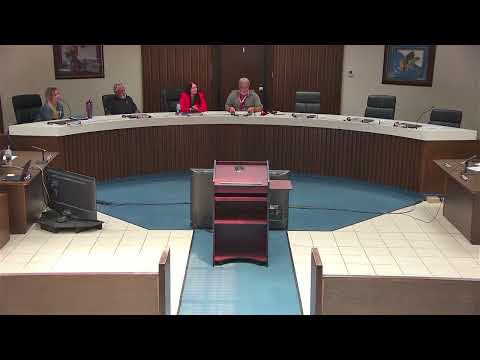
Motion to enter executive session fails; meeting proceeds without closed session
Summary
A motion to go into an executive session under 25 O.S. § 307(B)(4) was moved and seconded but did not pass; the body announced the vote failed and did not go into closed session before adjourning.
A committee member moved that the body go into an executive session under 25 O.S. § 307(B)(4) to discuss confidential communications with legal counsel, but the motion failed and the public body did not enter a closed session.
The meeting opened with a declaration that a quorum was present. During roll call a clerk called names ('Matthew, Stevens') and at least one member responded, "here." The chair then introduced item one and recited the statutory basis cited in the transcript for holding an executive session, describing it as applicable "to discuss confidential communications between a public body and its attorney concerning a pending investigation, claim or action if the public body with the advice of its attorney determines that disclosure will seriously impair the ability of the public body to process the claim or conduct a pending investigation, litigation or proceeding in the public interest." The statute was presented in the record as "25os 307B4" in the transcript; the standard legal citation format is 25 O.S. § 307(B)(4).
"Make a motion to go to executive session," said a committee member, and another member added, "I'll second." Several brief verbal votes followed in the record ('Yes,' 'No,' 'Yes'), after which the chair announced, "Okay. Vote fails 31." The chair then stated that the body would not go into executive session and that there was no action on the agenda item requiring a closed session.
The chair noted that meetings may be adjourned "by power of the chair" and closed the session. The transcript records the closing line as "We're journed," which appears to be a transcription error for "adjourned." The public record provided does not attribute the motion, second or individual votes to named members; the meeting announced only that the vote failed and no executive session occurred.
Because names and specific vote tallies are not attributed in the transcript, this report uses functional labels (for example, "a committee member") when attributing remarks. Any formal minutes or roll-call records that list individual votes should be consulted for member-level voting records.