Get Full Government Meeting Transcripts, Videos, & Alerts Forever!
Get email alerts on the User Fee Schedule topic
No spam. Unsubscribe anytime.
Houston City Council adopts updated user fee schedule, effective Sept. 1, 2026
Summary
The council voted 4–0 to adopt Resolution 2026‑14 after staff presented a citywide fee study recommending increases and structure changes for parks, building permits, business licenses and other operational fees; staff noted many fees had not been updated since 2009 and recommended annual reviews and an optional inflation adjuster.
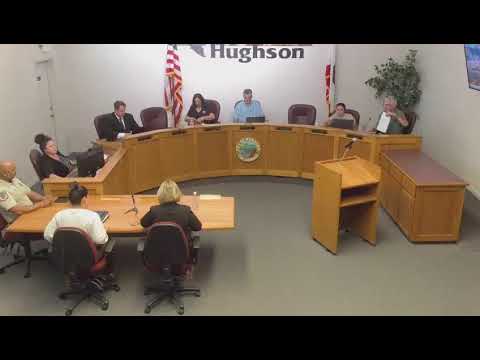
The Houston City Council on June 8 adopted Resolution 2026‑14, approving an updated citywide user fee schedule that staff said is intended to recover more of the operating costs of city services. The resolution was approved by a 4–0 roll call vote after a staff presentation and public comment. Council recorded votes were Council member Vasquez — “I,” Mayor Carr — “I,” Council member Strain — “I,” and Council member McFaden — “I.”
Staff presenter Miss Kim told the council the study looked only at operational user fees — not development impact fees, taxes or utility rates — and used fully burdened hourly rates plus departmental time estimates and overhead to calculate the full cost of providing services. “If you are subsidizing private benefit services, you don't have those general fund ... unobligated dollars available to pay for community benefits, general benefits, public safety,” Kim said, explaining the rationale for updating fees that largely have not been changed since 2009.
The staff packet and slides break the fee work into categories: parks and recreation, business licenses, building and planning fees, code enforcement penalties and deposits. Staff told the council parks and recreation currently operate at roughly 4% cost recovery and noted that many park fees have not been updated since 2009. By contrast, the building-permit flat‑fee line showed a current program cost recovery around 58%; staff recommended increases to narrow those gaps and, for many flat building fees, an average change toward full‑cost recovery (staff cited a figure of roughly a 107% average increase for certain flat building fees).
For business licenses, staff recommended raising six fees and lowering one, with an average suggested change of about 5% across those items. Staff also described deposit-based fees (actual-cost chargebacks) and project-valuation fees, and said they had identified obsolete fees and proposed three new building-related fees.
A public commenter asked how proposed fee updates would affect the local youth baseball/softball group (identified in the staff packet as HYBS). The commenter said the organization historically paid a flat $200 monthly fee. Kim responded that the staff report specifically addresses that item: the $200 monthly Leebrite Park fee equates to two tournament weekends (four full days) and that the fee had been treated historically as a discretionary council-set flat fee. Staff recommended council consider aligning that specific local arrangement with the broader updated schedule but noted any change would take effect for the next season.
Council members pressed staff for more detail about how much the general fund currently subsidizes community centers and parks (examples discussed included the Senior Center and a Third Street facility). Several members said the council’s policy goal should be to “break even” on these facilities and requested staff provide a breakout of subsidies and revenue for specific facilities. Staff said they would pull the revenue and expense figures and provide comparative information from similar cities if council wanted it.
Kim also presented an optional policy recommendation to adopt an annual inflationary adjustment to fees (staff suggested an inflator in the 3–5% range, applied automatically each July 1 until the next comprehensive study). Some council members expressed opposition to automatic annual increases and said they preferred periodic council review.
Council member McFaden moved to adopt Resolution 2026‑14; Council member Strain seconded. The motion passed 4–0. The resolution approves the fee schedule contained in the council packet and makes the schedule effective Sept. 1, 2026. Staff told the council it plans to conduct internal annual reviews and recommended comprehensive updates about every five years.
The council did not adopt any immediate amendments on the floor; staff will supply requested facility-specific subsidy figures and comparative community center fees by follow-up email or at a future meeting.
What happens next: Resolution 2026‑14 takes effect Sept. 1, 2026; staff will implement the adopted schedule and provide the financial breakout and comparative city data the council requested. The council can revisit individual fees (including the youth baseball flat fee) and may consider any future inflationary adjuster by separate action.