Get Full Government Meeting Transcripts, Videos, & Alerts Forever!
Get email alerts on the Retirement Claims topic
No spam. Unsubscribe anytime.
TRS webinar: what new retirees should expect for claim processing, payments and lump‑sum options
Summary
Teachers' Retirement System officials walked new retirees through the 60–90 day claim timeline, required member and employer forms, the accelerated annual increase (AI) lump‑sum option, excess contribution refunds, and online tools to track claim progress.
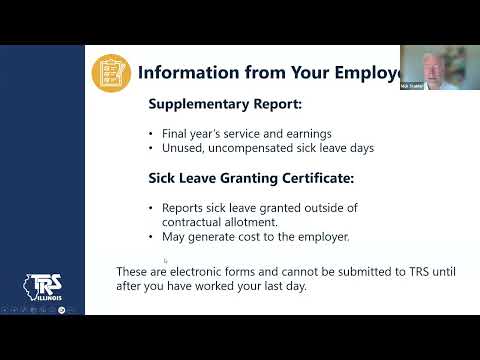
Nick Stabler, presenter with the Teachers' Retirement System (TRS), told attendees the normal processing time for a retirement claim is "60 to 90 days" once TRS has received all member and employer materials. He urged members to confirm that both their signed member forms and the district's electronic supplementary report and sick‑leave certification have been submitted, because incomplete employer data is a frequent cause of delay.
Why it matters: TRS cannot finalize a benefit or issue a first payment until all required documentation, district reporting and any outstanding balances are resolved. Stabler said members who owe balances for optional service purchases must either pay them (by check or rollover) or submit a waiver to remove the balance before TRS can calculate a benefit.
Stabler described the accelerated annual increase (AI) program, available to Tier 1 members, in which a retiree may elect an upfront lump sum in exchange for reduced future cost‑of‑living increases. "By saying yes on the AI election form, you're not saying yes, I want the lump sum; you're saying yes, I'd like to be offered the lump sum over the summer," he said, noting the AI election is irrevocable once returned.
TRS also highlighted several post‑payment refund types that may reach new retirees shortly after the first payment letter: ERRO sunset refunds, 2.2 upgrade refunds and a 1% survivor benefit refund for members without dependent beneficiaries. Stabler explained these refunds are mailed as one‑time checks from the state comptroller; if the retiree elects to roll the refund to another qualified plan, TRS can direct the transfer instead of mailing a check.
On taxes and payout options, Stabler emphasized that excess refunds and AI lump sums are taxable in the year they are received. He said TRS withholds 20% for federal income tax if a retiree receives a taxable refund as a check; rollovers to tax‑sheltered plans avoid withholding. He added that TRS issues 1099‑R forms each January for pension benefits and for each taxable refund taken.
Stabler recommended using the myTRSIL online account to monitor the "claim status tracker" (internally nicknamed the "pizza tracker") which shows whether member forms, employer forms, holds or finalization steps are complete, and allows members to upload required documents instantly. He also advised members to call TRS or the My Benefit Service Center with specific questions about rollovers, withholding or refund elections.
Next steps: TRS will mail a notification of first payment letter when calculations are complete; that letter is also available as a PDF once the claim status reaches "finalizing claim." Members who expect mailed refunds should decide whether to roll them to another plan to avoid the 20% federal withholding.