Get Full Government Meeting Transcripts, Videos, & Alerts Forever!
Get email alerts on the Budget topic
No spam. Unsubscribe anytime.
Tacoma School District presents 2026–27 budget amid multi‑year shortfalls; final vote set for June 25
Summary
District staff outlined a 2026–27 general fund proposal that responds to recurring shortfalls, rising insurance and utility costs, and a modest enrollment decline; adoption is scheduled for June 25 after a 21‑day public comment period.
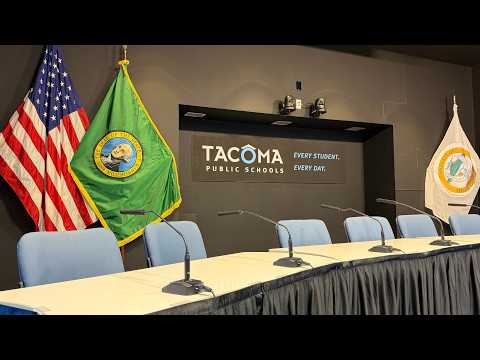
Tacoma School District officials on June 11 presented the proposed 2026–27 budget during a public hearing, describing multi‑year operating shortfalls and rising costs that shaped the spending plan. The board opened the hearing, and district staff said the budget will return for a formal adoption vote at the June 25 board meeting.
The presenter, Roz, told the board the district has faced repeated shortfalls in recent years — $10 million in 2023, $40 million in 2024, $30 million in 2025 and a $10 million shortfall in the current year — and that continued wage pressures, inflation, utility and insurance cost escalation, and a lower‑than‑expected enrollment have constrained options for reductions without affecting programming. “We have fewer and fewer options with which to make reductions in staff and discretionary costs without impacting programming,” Roz said during the presentation.
The proposed general fund totals about $624.6 million, Roz said, with state revenue representing roughly 72% of that total, the local enrichment levy accounting for about 16% and federal funds about 8%. Roz said the district increased its levy reliance after a recent voter‑approved proposition and built in approximately $9.8 million (about a 1.5 percentage‑point growth in the fund balance) to begin rebuilding reserves. She noted the district avoided layoffs in this budget cycle.
Board members and staff discussed the state funding context, citing the “paramount duty” language and the prototypical school model as frameworks for what the state owes districts. One director cautioned that recently passed statewide revenue measures (referred to in the meeting as the “millionaire’s tax”) are subject to legal and ballot challenges and, even if sustained, are unlikely to deliver district cash before 2029–2030; Roz confirmed those revenues were not incorporated into the 2026–27 budget.
Officials highlighted specific cost drivers: fuel and route changes for transportation, an $800,000 year‑over‑year increase in utilities, and a jump in health insurance premiums (the presenter cited a U premium rising to $10.7 million from $6.6 million in 2024–25). The presenter also reviewed other funds: a debt service estimate of about $83.4 million for principal and interest obligations in 2026–27, Associated Student Body funds (~$5.1 million) and a transportation vehicle fund with planned capacity but no immediate bus purchase.
District leaders described their budgeting approach as a two‑year cycle aligned to the state and said they will continue monitoring discretionary decision packages that were set aside pending confirmation of grant and federal funding. The presentation noted the district had conducted a budget advisory committee last year and directed interested members of the public to review decision‑package documents posted on the district website; the formal F195 packet was not yet posted but is expected before the adoption vote.
Votes at a glance: during the same meeting, the board approved several consent and business items by voice vote, including interdistrict agreements (TSD25179–TSD25203), contract TSD26113 with The Math Learning Center ($288,420 for K–5 Title I math interventions), interlocal agreement TSD‑26‑103 with the Washington State Department of Licensing (student ID cards, McKenna Vento funding) and authorization to negotiate a design‑build contract with ATS Automation for the TPS cleaning phase 3 multi‑facilities project. Each item was moved, seconded and adopted on voice vote; no roll‑call tallies were recorded in the public minutes.
What happens next: the board will accept public comment on the budget during the 21‑day review window and is scheduled to vote on adoption of the 2026–27 budget at its June 25 meeting. The district also said it will continue to align staffing models and spending plans with enrollment and grant realities as the year unfolds.
The public hearing closed and the board moved on with its agenda; the formal budget adoption resolution will appear on the June 25 agenda.