Get Full Government Meeting Transcripts, Videos, & Alerts Forever!
Get email alerts on the Municipal Governance topic
No spam. Unsubscribe anytime.
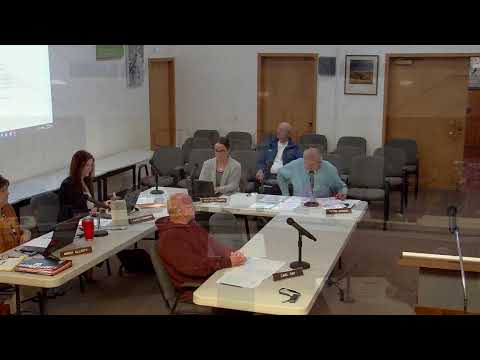
Craig City Council approves budget carryovers, sales-tax reporting changes, airport IGA and several equipment purchases
Summary
At its March 11 meeting the Craig City Council approved supplemental budget carryovers, aligned local sales-tax filing thresholds with state law, approved an intergovernmental agreement with Moffat County on airport management, and greenlit equipment purchases including Special Response Team ballistic plates and a raw water control valve contract.
The Craig City Council on March 11 approved a package of ordinances, intergovernmental agreements and equipment purchases intended to carry forward unfinished projects from 2024, align local tax filing rules with state law, and address several operational needs.
The council voted to adopt Ordinance No. 1163, a supplemental appropriation to carry forward 2024 capital project commitments into the 2025 budget; Finance Director Mindy Elliott said the packet identifies carryovers including a $333,700 net increase to the general fund and line items for wastewater and the Craig Housing Authority as detailed in the meeting packet. Later in the meeting the council approved Ordinance No. 1164 to amend chapter 3.16 of the Craig Municipal Code to match House Bill 24-104 on sales-tax reporting periods, allowing very small filers to file annually, quarterly filing up to $600/month, and monthly filings for larger vendors.
City Attorney Heather Cannon presented an updated intergovernmental agreement with Moffat County to clarify airport ownership, management and budgeting procedures. Cannon said the county has been the entity that ‘‘for years made all of the decisions with regard to what happens out of the airport,’’ and the revised IGA structures how airport expenses and revenues will be reported to the city and budgeted annually. After questions about deeds, insurance and reporting cadence, the council approved the IGA as presented.
The council also approved a purchase for ballistic plates and carriers for members of the Special Response Team to replace expired equipment. City Manager Peter explained the purchase was sole-source via a state bid. The amount recorded in the meeting packet is $19,232 (the transcript contains inconsistent numeric renderings); the council approved the purchase.
A motion to add and approve a letter of support for a U.S. Department of Transportation Rural and Tribal Assistance Pilot Program grant application was added to the agenda and approved. The request, prepared by the county, would fund master planning for commuter-rail station areas from Oak Creek to Craig; the grant request is for $700,000 with no local match and Routt County (as described in the packet) would administer the grant.
Votes at a glance • Ordinance 1163 (supplemental appropriation) — approved on second reading; Finance packet lists carryover amounts. • Ordinance 1164 (sales-tax reporting alignment with HB24-104) — approved on second reading. • Craig–Moffat County Airport IGA — approved; clarified monthly reporting to the city and budget approval timing. • Purchase of SRT ballistic plates and carriers (Point Blank Enterprises) — approved (packet amount: $19,232; transcript shows inconsistent figures). • Letter of support for USDOT planning grant ($700,000) — approved; county to administer application.
Deborah Fitch, who was appointed to the Economic Development Advisory Council to fill a member-at-large position until September 2025, addressed the council and thanked members for the nomination: "It's nice to meet everyone here and thank you very much for the nomination and look forward to working with you," she said.
What happens next: Staff will proceed with the contract and purchase processes for approved equipment, and the city will coordinate with the county on the IGA implementation and the requested letter of support for the DOT grant. Ordinances approved on second reading will be reflected in the city budget and municipal code in accordance with standard post-adoption procedures.