Get Full Government Meeting Transcripts, Videos, & Alerts Forever!
Get email alerts on the Municipal Budgeting topic
No spam. Unsubscribe anytime.
Fort Walton Beach council braces for budget cuts as operations cap and possible homestead exemption loom
Summary
City leaders directed staff to prepare a deep budget workshop after the meeting, citing a binding operations cap (CPI + 3% now 2.53%), potential $1.2 million ad valorem loss from a proposed homestead exemption, and rising deferred maintenance. Options discussed included surplus property sales, enterprise-rate increases, MSBUs/fees and service consolidation.
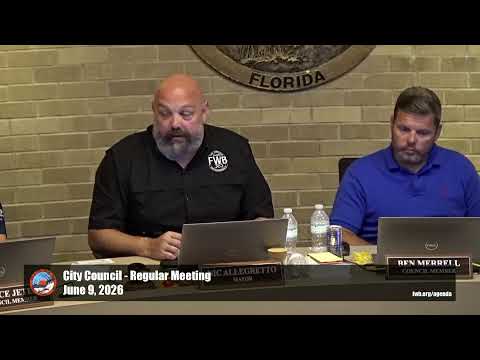
Fort Walton Beach — The City Council asked staff to prepare an expanded budget workshop after City Manager Mr. Davis outlined looming budget pressures tied to the city's operations cap and a possible statewide homestead exemption that could reduce ad valorem revenue.
Mr. Davis told council the cap formula being used this budget cycle (CPI plus 3 percent; the CPI figure currently used is 2.53 percent) limits how quickly operating budgets may grow and, combined with a possible homestead exemption expected to reduce ad valorem revenue by about $1.2 million in a future year, creates a structural shortfall. "We either cut services, raise millage, or use a combination of both," Mr. Davis said, adding that deferred maintenance on facilities has increased near-term capital needs.
Why it matters: Council members said the city must decide whether to preserve service levels by raising tax rates or to restructure operations. Councilman Schmidt warned council that the public's vote for the cap now requires the council to prioritize and potentially cut services.
Council discussion and options: Participants suggested a range of responses for evaluation at a June 16 workshop, including: assessing surplus properties for sale or transfer to other public bodies, raising enterprise fund fees (for example golf and boat-launch fees), instituting targeted assessments or MSBUs, seeking sponsorships for events, privatizing or outsourcing noncore services, and pursuing grants for capital needs. Mr. Davis said some short-term tactics (for example moving smaller capital purchases from operating to capital by changing thresholds) could mitigate pressure but would not replace structural revenue.
Quotes from the meeting: Councilman Jeter, speaking about capital project prioritization, said, "We have to take the gloves off and be prepared to really... not fight that whole day. We're going to have to cut some things." Mr. Davis cautioned that trimming benefits or training could hurt retention: "We're going to start cutting training and conferences—that's where we're headed unless we find another solution."
Next steps: Council directed staff to compile: (1) a list of potential surplus properties, (2) department-level proposals for service consolidations or cost reductions, (3) fee and enterprise rate options, and (4) grant opportunities that could fund specific capital projects. The city manager and finance director will present a detailed workshop on June 16. The council asked staff to prepare budgets accounting for the worst-case homestead-exemption scenario, noting they could later scale back if revenues prove stronger.
What remains unresolved: No formal decisions were made at the meeting. Council members differed on whether to favor millage increases immediately or pursue service reductions and asset sales first. The workshop will present scenarios and costs for formal consideration.