Get Full Government Meeting Transcripts, Videos, & Alerts Forever!
Get email alerts on the Public Engagement topic
No spam. Unsubscribe anytime.
NextGen board prioritizes outreach: pulse survey, neighborhood mapping, block-party templates and childcare research
Summary
The advisory board agreed to draft and review a recurring public pulse survey, advance a neighborhood-mapping pilot for better community engagement, prepare block‑party templates and begin research on childcare availability and affordability in Littleton.
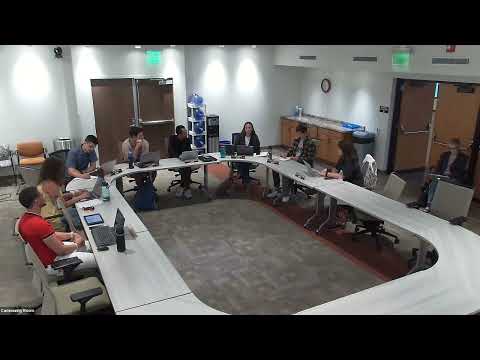
At the June 4 meeting the NextGen advisory board focused substantial time on outreach initiatives designed to increase engagement with younger residents and neighborhood organizations.
Survey pilot: One board member proposed a recurring “pulse” survey (monthly or quarterly) targeting younger adults (roughly 18–36) to gather trends and timely feedback for board meetings. The board agreed to review draft questions at the July meeting and run a pilot afterward; members discussed logistics (Google Forms or city-hosted forms), intercepts in public spaces (library, recreation center), coordination with communications staff, open-records implications and outreach channels (Reddit and local social media).
Neighborhood mapping: The board reviewed a council request to update Littleton’s neighborhood map to make city communications and event outreach more navigable. Members outlined top-down and bottom-up mapping approaches and favored a two-tier model with formal districts and flexible sub-neighborhoods. The board asked one member to draft initial maps and staff to provide feedback for a July discussion.
Third-space activation and block-party support: Members reported research into third‑space assets (coffee shops, co‑working, niche clubs) and suggested a digital bulletin-board, QR-code outreach and simple templates and checklists for neighborhood block parties. One idea proposed shared "trailers" (movie or game‑night kits) to support events and noted that prior years had about 73 block parties with a typical grant level around $500 each.
Childcare research: A board member proposed producing a short white paper on childcare supply and affordability, citing recent local center closures and county-level slot gaps (speaker cited an approximate county gap of 7,000 slots in earlier county figures). The group recommended a 3–5 month research timeline to quantify local impacts and potential city responses.
Next steps: The board agreed to review the survey draft in July, to circulate mapping materials and to assemble templates for neighborhood events. Several members volunteered to help recruit survey respondents and to coordinate outreach channels; no formal motions or budget commitments were made.