Get Full Government Meeting Transcripts, Videos, & Alerts Forever!
Get email alerts on the Annexation topic
No spam. Unsubscribe anytime.
NextGen board debates exploring Littleton annexation to boost sales-tax revenue
Summary
Michael proposed a preliminary study on annexing nearby commercial areas—including Southwest Plaza and Wadsworth shopping nodes—to raise sales-tax revenue to help cover downtown project debt; board members urged legal review, owner outreach and a data-driven viability study before recommending council action.
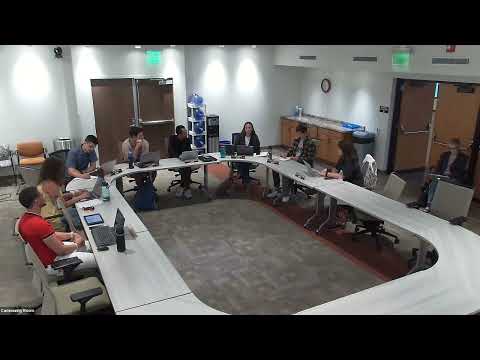
Members of the Littleton City NextGen advisory board spent the longest portion of their June 4 meeting debating a preliminary proposal to explore annexing nearby commercial areas as a way to increase city revenue.
Michael, who introduced the idea, said annexation would target retail-heavy parcels (he specifically cited Southwest Plaza and nearby shopping centers at Wadsworth) to capture sales-tax receipts that currently accrue outside the city. He framed the proposal as an early-stage, data-first inquiry: ‘‘The main goal would be going after Southwest Plaza, BS Crossing, and then maybe some of the other shopping centers,’’ he said, adding that the proposal is only an idea at this stage and that legal, fiscal and utility questions remain to be answered.
Why it matters: Littleton relies heavily on sales tax (about 80% of municipal sales revenue, the speaker said). Officials said a successful annexation could generate consistent revenue to help service planned downtown debt; opponents warned of costs the city could inherit, including roadway and sewer obligations.
Board members pressed for specifics before forwarding anything to council. The members highlighted three classes of questions that must be resolved: legal authority and process (Littleton’s three-mile plan and the requirement that 50%-plus of landowners agree to annexation), a careful estimate of incremental revenues versus the long-term capital and service costs the city would assume, and utility and intergovernmental issues, such as which sewer districts serve the area.
Concerns and clarifications: Members noted that some parcels in the proposed area use a Littleton mailing address while remaining in unincorporated county territory and do not currently pay city taxes or receive city services. One speaker estimated residential exposure might be “maybe two or 300 homes” would have to be considered if boundaries were drawn to include commercial parcels. Another member emphasized that annexation would require convincing major property owners—whose commercial customers currently travel to the area—to accept the tradeoff of new city requirements.
Next steps: The board coalesced behind a narrow, staged approach: (1) confirm whether annexation is legally feasible with the city attorney, (2) produce a rough, low-cost fiscal estimate of potential sales-tax revenue and associated expenses, and (3) present a short letter or memo to council recommending whether a deeper viability study is warranted. Michael volunteered to lead early research and draft the initial memo. No formal motion or council referral was taken at the meeting.
What the public said: During public comment, Pam Chap urged the board to publish viability materials and to consider local business impacts and prior NextGen work on homelessness when evaluating annexation proposals.
The board agreed to return to this topic with preliminary findings for a future meeting rather than asking staff to pursue a full annexation campaign immediately.