Get Full Government Meeting Transcripts, Videos, & Alerts Forever!
Get email alerts on the Land Use topic
No spam. Unsubscribe anytime.
Paris council directs staff to pursue citywide ban on data centers after large public turnout
Summary
Following a two-hour public comment period and staff presentation on potential impacts, the Paris City Council voted unanimously to direct staff to pursue a citywide prohibition on large-scale data centers and send a draft ordinance to the planning commission for review.
The Paris City Council on June 29 voted unanimously to direct staff to pursue a citywide prohibition on large-scale data centers, referring the matter to the planning commission for draft language and a recommendation back to council.
Principal Planner Raphael Garcia told the council the city code currently does not define or regulate large data centers and that such facilities — often 250,000 to more than 1 million square feet — differ from warehouses by requiring continuous 24-hour operations, substantial electricity and water for cooling, and specialized mechanical equipment that can create persistent mechanical noise. Staff presented four regulatory options, including a citywide ban and permitting pathways with conditional use permits and development standards. Garcia said a hypothetical 800,000-square-foot data center could be valued substantially higher for property-tax purposes than a comparably sized warehouse, and that utilities would need early partnership with Southern California Edison and regional water providers to serve large facilities.
More than two dozen residents and local advocates filled the public-comment period, almost all urging a prohibition. Speakers raised environmental, health and equity concerns: potential increases in electricity and water demand, higher utility bills for residents, generator emissions and air quality impacts, continuous mechanical noise, and limited permanent local jobs compared with the size and resource footprint of such facilities. "For decades, Paris has done more than its fair share to support regional economic development," said Elizabeth Vilobos, a resident who urged that data centers not be sited in Paris. Several speakers cited Monterey Park’s recent ballot measure banning data centers as precedent and called for strong, explicit language to avoid loopholes (speakers referenced past concerns when a warehouse moratorium allowed parcel hubs to proceed).
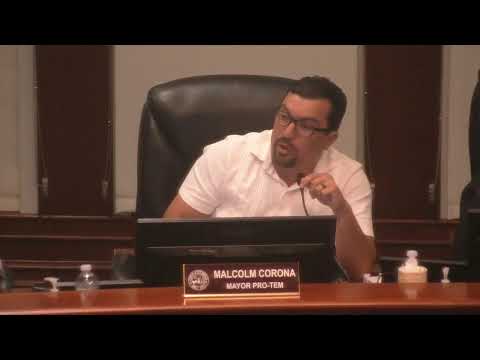
Council member Nava moved to direct staff to move forward with a citywide ban and to refer the item to the planning commission; the motion was seconded and, after reduced public-comment time for the large speaker list, passed on a 5–0 roll-call vote (Vjo, Nava, Prom Corona, Rab, Vargas). Councilmembers and staff emphasized the planning commission will examine draft language and return a recommendation; final prohibition would require subsequent formal action by the council.
The staff presentation noted potential regulatory approaches used by other cities — from outright prohibitions to conditional use permits with heightened setbacks, noise mitigation and infrastructure review — and recommended that any approach account for utility capacity, traffic and sensitive receptors. Planning commission hearings and written findings will be necessary before council could adopt a permanent zoning prohibition or ordinances affecting development standards.
The council’s direction does not itself enact a ban; it initiates the next regulatory steps. City staff said they will prepare language reflecting council direction and community input for planning commission review and later return to the council with a recommendation.