Get Full Government Meeting Transcripts, Videos, & Alerts Forever!
Get email alerts on the Planning Fees topic
No spam. Unsubscribe anytime.
Live Oak approves Resolution 2026‑27 to add de‑annexation fee and double fees for after‑the‑fact applications
Summary
Council approved Resolution 2026‑27 to amend planning and zoning fees: adding a fee to process contraction/de‑annexation applications and doubling application fees when applicants seek relief after violating land‑development rules; supporters said the change encourages compliance.
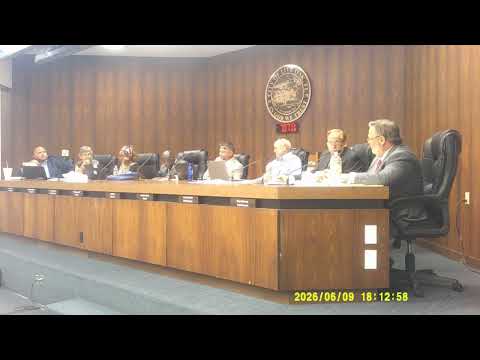
The City Council of Live Oak approved Resolution 2026‑27 to amend the planning and zoning fee schedule, adding a fee for contraction/de‑annexation and establishing a penalty that doubles application fees when an applicant seeks a variance, special exception, or land‑use change after violating land‑development regulations.
Mr. Earnest introduced the resolution and explained that the city’s land development regulations require council‑set fees by resolution. He told the council there was not a standalone fee for ‘‘contraction’’ (de‑annexation) in the voluntary‑annexation fee category and recommended adding that fee without changing amounts. Separately, he proposed doubling application fees for applicants who violated the code (for example, constructing without permits and later seeking relief) to mirror existing double fees used as a penalty in the building permit code.
Council members asked whether the proposed doubling of application fees is common in other cities. Speakers noted many jurisdictions impose penalties for work without permits and that the goal is to encourage compliance; some other jurisdictions use liens, deputized enforcement officers, or criminal prosecution in extreme cases. A staff speaker described enforcement variations and said the city currently has code‑enforcement and lien options but not a routine citation program in place.
The council discussed how the statewide $7,500 exemption operates. A staff presenter clarified that the $7,500 threshold does not apply to electrical, plumbing, mechanical, or structural work and therefore does not create a broad, across‑the‑board allowance for construction; most typical projects still require permits and inspections.
Members took a voice vote and the chair announced the resolution approved. The transcript does not record a roll‑call tally of individual councilor votes for the resolution beyond the voice approval.
The staff follow‑up task is to implement the fee changes in the fee schedule and update administrative materials; no specific fee amounts or effective date beyond the resolution language were recorded in the transcript.