Get Full Government Meeting Transcripts, Videos, & Alerts Forever!
Get email alerts on the Land Use Rezoning topic
No spam. Unsubscribe anytime.
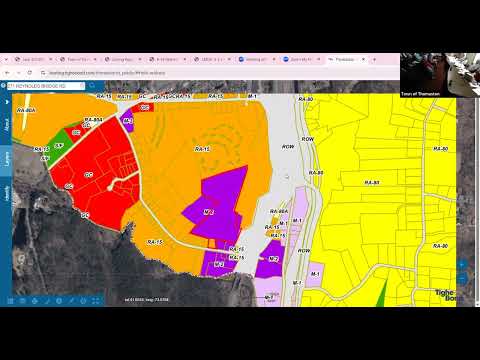
Public hearing continued on plan to split and rezone 269–271 Reynolds Bridge Road in Thomaston
Summary
An applicant seeks to subdivide 269–271 Reynolds Bridge Road into three lots and rezone two of them from M2 to RA15 to allow residential development; the Planning & Zoning Commission continued the public hearing after questions about wetlands, blasting, sewer capacity and a town-attorney opinion on spot zoning.
Thomaston — The Planning and Zoning Commission opened, heard public comment on, and then continued a public hearing on June 3 about applications to subdivide 269–271 Reynolds Bridge Road and to change the zoning of two of the resulting lots from M2 (manufacturing) to RA15 (residential).
Attorney Joe Williams, representing Thomas Industrial Park LLC, told the commission the request would split the roughly 24-acre parcel into three lots: a roughly 2-acre lot to remain M2 that fronts Reynolds Bridge Road and two lots totaling about 22 acres proposed to be rezoned RA15. Williams said the filing asks only for subdivision and map amendment approvals and that any development plan would return later to the commission for site-plan or special-permit review.
"We're asking only to divide the lots and to change the zoning of the property; any development proposal would have to come back before you," Williams said.
Why it matters: The applicant argued the rezoning would advance the town’s 2025 Plan of Conservation and Development goal to expand housing options for workers, families and seniors, and would be a downzoning from heavy manufacturing to lower-intensity residential uses for most of the parcel. The applicant also said the proposed RA15 parcels are surrounded in part by existing RA15 neighborhoods and would be consistent with nearby uses.
Legal caution cited: A written opinion from the town attorney (read into the record) warned the commission to consider whether carving out a small M2 parcel while rezoning the larger area would amount to reverse spot zoning — a legal issue in Connecticut when a small reclassification is ‘‘out of harmony’’ with a comprehensive plan and fails to serve a reasonable public purpose. The attorney’s memo said the commission must determine whether the amendment serves a public purpose and benefits the town as a whole.
Owner Tim Browski responded that the remaining M2 parcel would not be an isolated island and pointed to existing manufacturing properties across Reynolds Bridge Road. "It stays contiguous and relates to the other manufacturing zones and manufacturing uses right here," Browski said, asking the commission to focus on the full mapping context.
Public concerns: Neighbors raised several issues the commission said will be addressed at later application stages. Abutter Brian Adams asked repeatedly about blasting and said his home already has cracks from past blasting; applicant representatives said pre-blast surveys, seismographs and fire-marshal coordination would be performed if and when a development plan is proposed. Resident Tom Scully said a small wetland area exists based on his recollection of the property; staff said the presence of wetlands will require verification (a map or a soil scientist) during future reviews. Resident Josh Williams asked who would pay for sewer upgrades if a large number of units were built; staff said sewer capacity and upgrades are a separate matter before the WPCA and the town is studying a mult-million-dollar project.
Support and balance: Several speakers, including a member of the fire department who identified himself as an acting fire commissioner, told the commission they had no service concerns and that additional housing could be beneficial. Other neighbors said they support the applicant’s prior work in town but want more detail on future building scale, tree clearing, blasting mitigation and infrastructure impacts before site-level approvals.
Outcome and next steps: After discussion the commission voted to continue the public hearing to the next monthly meeting and asked the applicant to provide the town-attorney letter and any supplemental materials in advance. No development approvals were granted; the commission emphasized that building heights, grading, blasting and sewer connections will be decided only at later hearings when specific site plans or WPCA filings are filed.