Get Full Government Meeting Transcripts, Videos, & Alerts Forever!
Get email alerts on the Flood Resilience topic
No spam. Unsubscribe anytime.
Pasco County expands monitoring and pursues roughly $107 million in flood-mitigation projects after 2024 storms
Summary
Pasco County officials say new coastal and roadway instrumentation, regional data-sharing and a pipeline of state and federal grants (about $107 million in projects) aim to reduce future flooding in hard-hit areas such as Zephyrhills and Dade City.
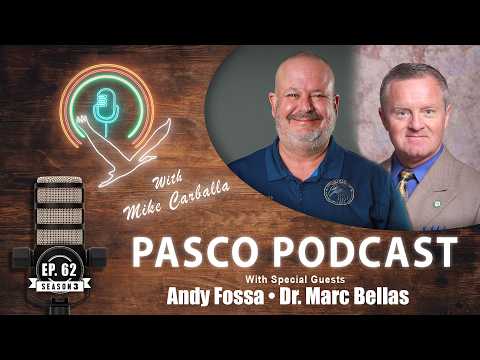
Mike Carbala, host of the Pasco Podcast, convened Pasco County emergency leadership to discuss lessons from the 2024 storms and the county’s strategy to reduce flood risk.
Dr. Mark Bellis, chief strategy and sustainability officer for Pasco County, said the county created the Office of Strategy and Sustainability to coordinate long-term resilience work and that one early priority was fixing a coastal "data blackout". "There was literally a data blackout from Cedar Key to Clearwater," Bellis said, and Pasco secured funding to install coastal and inland instrumentation so the county can monitor water movement and predict local impacts.
Emergency management director Andy Fauca said the instrumentation will include water sensors and roadway monitors on key routes, including U.S. 19 and several bridges, allowing the county to identify inundation in real time and divert traffic. "We're going to start pumping water immediately" and pre-stage assets, Fauca said, describing a strategy to lower water levels before a storm to create capacity.
Officials said the instrumentation is being integrated with state and federal partners and with university modeling work. Bellis noted the monitoring will feed regional models and that the county is coordinating with the University of South Florida and the National Weather Service so data can be shared across the region.
Funding for mitigation work is coming largely from state and federal grants, officials said. Fauca listed programs including Hazard Mitigation Grant Program (HMGP), Swift Current and Elevate Florida and said Pasco currently has roughly $107 million of projects with the state. "We are probably the number one in the state with projects," Fauca said, adding the majority of those dollars are state or federal, not local tax funds.
County leaders also discussed using HUD and CDBG funding to harden schools so they can serve as shelters in areas such as Zephyrhills, and said they have begun meetings with the school board and housing officials to apply for those projects. "We're going to start the application process" to harden schools and make them available as shelters, Fauca said.
Bellis described a "Flood Vision" initiative — a detailed modeling and visualization tool that combines roadway and elevation data so residents can see how specified surge or water levels would affect a given street or property. "If Andy says, 'We're going to get 10 feet of storm surge,' we can pull that up and say here's what Grand Street's going to look like," Bellis said.
Why it matters: Pasco officials say better, local data and a coordinated funding strategy should make mitigation investments more targeted and defensible when applying for grant dollars. The county is updating a vulnerability assessment and using post-storm data to prioritize precision investments in roadways and drainage that officials say will deliver the greatest benefit for the community.
Next steps: Officials said instrumentation installations and monitor rollouts are forthcoming, vulnerability-assessment updates are planned, and grant applications for shelter hardening are in progress. No formal votes or ordinance actions were taken during the podcast discussion.