Get Full Government Meeting Transcripts, Videos, & Alerts Forever!
Get email alerts on the Regional Transportation topic
No spam. Unsubscribe anytime.
Craig council hears presentation on proposed Yampa Valley Regional Transportation Authority
Summary
Consultant Bill Ray introduced a draft intergovernmental agreement to form a Yampa Valley RTA covering Routt County and Craig, outlining governance, service goals (more buses on US‑40, a Craig circulator, airport connections), and funding options; council held the first of two required public hearings with no speakers and scheduled a second hearing April 8.
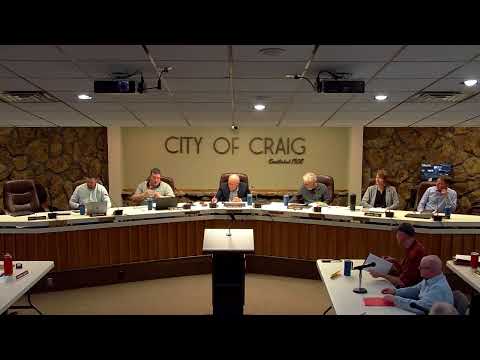
Bill Ray, the consultant leading formation work, told Craig City Council on March 25 that the proposed Yampa Valley Regional Transportation Authority (RTA) would be a public entity formed by two or more local governments to plan and operate regionwide transportation services.
"An RTA or regional transportation authority would be a public entity," Ray said, explaining the legal formation process, the intergovernmental agreement (IGA) that must be drafted by member jurisdictions, and that final creation would require voter approval.
Ray outlined the proposed membership and boundaries — Routt County and the municipalities of Steamboat Springs, Hayden, Oak Creek, Yampa and the city of Craig — and described a list of near‑term service goals that the formation committee has prioritized. Those goals include increasing the number and frequency of buses on U.S. 40 between Craig and Steamboat; establishing a local circulator route in Craig to connect riders to regional service; adding routes to unserved parts of Routt County; providing bus service to Yampa Valley Regional Airport for workers and travelers; and improvements for pedestrian and roadway safety adjacent to new transit stops.
Funding mechanisms under discussion include a sales tax (with groceries and certain utilities exempt under state law), motor‑vehicle registration fees, service fees or tolls, member jurisdiction revenue pledges, private contributions and state and federal grant eligibility. Ray said the RTA formation committee expressly removed property tax from consideration and is not currently pursuing a lodging tax.
Craig Mayor Nichols and council members pressed for public outreach and noted timing constraints. Ray said the process requires two public hearings in each jurisdiction; Craig’s second hearing is scheduled for April 8, at which council may be presented a resolution to approve the current draft IGA. If the IGA and ballot language move forward, the formation committee is targeting a November 2025 vote for voters to decide whether to create the RTA and, separately, whether to authorize any taxes.
No members of the public spoke during the March 25 hearing. Ray said formation staff will continue outreach — surveys, stakeholder committees and communications — through the summer to refine service goals, funding scenarios and ballot language before a September deadline for final decisions on placement on the November ballot.
Why it matters: The RTA would create a formal regional body to plan and deliver transit across a multi‑county area, potentially expanding commute options, supporting workforce mobility and opening access to state and federal transportation grants.