Get Full Government Meeting Transcripts, Videos, & Alerts Forever!
Get email alerts on the Cdbg Funding topic
No spam. Unsubscribe anytime.
Glendale approves $3.21 million FY2026-27 CDBG/ESG/HOME action plan amid questions about grant priorities
Summary
The Glendale City Council and Housing Authority unanimously approved the FY2026-27 annual action plan totaling $3,210,581, directing funds to public social services, capital projects and HOME programs. Councilors and callers pressed staff on service areas, small-grant thresholds and the use of nonfederal funds.
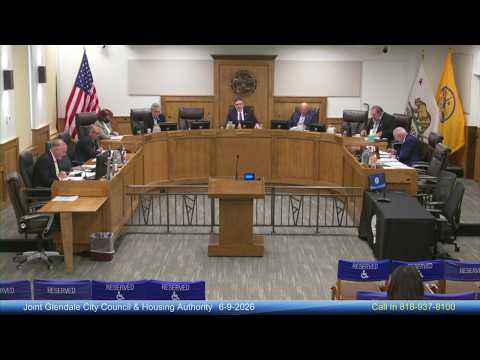
The Glendale City Council and Glendale Housing Authority on June 9 unanimously approved the city’s FY2026-27 action plan for the Community Development Block Grant (CDBG), Emergency Solutions Grant (ESG) and HOME programs, a package totaling $3,210,581 that staff said is about 1.7% less than last year.
City staff told the joint meeting the allocation includes $259,640 for public social services, roughly $1.1 million for capital improvements and $1,326,000 for HOME program activities such as rental development, community housing development organizations and tenant-based rental assistance. Staff said the funding mix reflects reductions in available entitlement funds and committed fund balances carried from prior fiscal years.
Council members pressed staff on details of several recommendations. A council member asked whether a November 18, 2024 procurement was a single RFP; staff confirmed it was one RFP issued to community agencies. Councilor Najarian questioned why the largest capital improvement recipient carries “Burbank” in its name; staff said the Kids Community Clinic’s site that staff visited is located in Glendale, that the clinic operates a mobile dental van serving Glendale Unified elementary schools and that the proposal documents indicate at least 60% of the clinic’s clients are Glendale residents. Staff added the clinic’s capital request would retrofit a dental clinic to better serve special-needs children.
Council member Oaderian Broman asked whether the city should concentrate funding into fewer, larger grants rather than awarding many small grants. Staff said the advisory committee typically treats $10,000 as the practical minimum because awards below that level impose disproportionate administrative overhead and that applicants are asked about the minimum amount they require to operate effectively.
Two callers during public comment raised related concerns. Fernando Ralden said the plan lacks clear steps to increase accessible housing and restroom access for people with disabilities and urged the council to pursue funding for accessibility. Caller Annie Cash urged officials to consider Los Angeles County funding and questioned whether outside parties and developers are prioritized over community needs; staff asked Cash to submit written examples so the city can investigate.
After the presentation and public comment, the council and housing authority each moved and seconded the resolution and motions to adopt the annual action plan and to submit it to HUD. Roll-call votes recorded unanimous approval in both bodies.
The council and authority directed staff to proceed with the substantial amendment and to implement the allocations recommended by the CDBG advisory committee and the Continuum of Care board. Staff said the plan will include performance measures for funded agencies and that any unused or canceled funds under $50,000 may be reprogrammed by the city manager or designee with advisory-committee approval.
The action will be submitted to the U.S. Department of Housing and Urban Development as required and, according to staff, the amendments reflect efforts to maintain HUD timeliness and program performance standards.