Get Full Government Meeting Transcripts, Videos, & Alerts Forever!
Get email alerts on the Public Safety Towing topic
No spam. Unsubscribe anytime.
City updates recorder/towing ordinances; local operators raise concerns about dispatch language
Summary
Council approved a package of amendments to recorder and towing ordinances clarifying permits, dispatching, timing and rotation rules. Local operators attending the premeeting asked removal of language that would let a company called by dispatch coordinate another to respond, citing confusion and liability concerns; staff defended longstanding local practices and the ordinances passed.
Council approved a package of updates to recorder and towing service ordinances intended to modernize dispatch, permit and rotation procedures for the City of Muskogee.
Staff said the reforms followed a meeting that included towing/recorder service owners, police, fire and emergency management to clarify expectations and ensure a fair rotation. The changes include time requirements for response, permit and inspection requirements, and a clarification that both the police and the fire department (or their designates) may call a record service to the scene.
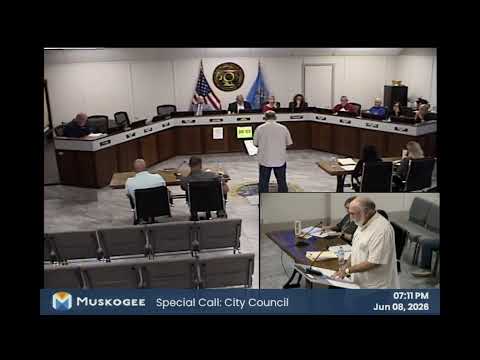
Ryan Cooper of D's Record Service, who addressed council during the meeting, asked that language be removed that would allow a record service called by dispatch to "coordinate another record service to arrive to the scene on their behalf," arguing it would create confusion for 911 dispatch logs and make it unclear where an impounded vehicle was stored. Cooper told council he feared liability and operational confusion if the originally‑called company outsourced the response. Other industry participants and staff said a long‑standing informal practice among local operators — allowing a "buddy" pickup so small operators don't lose rotation opportunities — has worked for decades and that the time clock for the response begins when the first company is called.
Council members voted to approve the ordinances after public comment and staff recommendation; the ordinance package will proceed through required readings where applicable.
Why it matters: the ordinances govern how emergency and incident towing is dispatched and recorded, which affects police operations, vehicle owners, local towing businesses and 911 dispatch accuracy. Industry concerns about recordkeeping and liability surfaced and may prompt additional clarifying guidance between dispatch and the rotation list.
Quotes: "If dispatch requests a record service to respond to the scene, that record service that's been requested by dispatch shouldn't have the ability... to call another record service to respond on their behalf," said Ryan Cooper during public comment.