Get Full Government Meeting Transcripts, Videos, & Alerts Forever!
Get email alerts on the Hazardous Materials Incident topic
No spam. Unsubscribe anytime.
Garden Grove residents press council for shutdown, compensation after GKN chemical incident; air monitors report no community MMA detected
Summary
Garden Grove heard hours of public comment June 9 after a May 21 methyl methacrylate incident at a GKN Aerospace site; Orange County United Way and city staff outlined emergency assistance and business outreach, South Coast AQMD consultants said air monitoring has not detected MMA in the community, and GKN pledged transparency and a town hall amid calls for a moratorium or shutdown.
Garden Grove City Council convened a special meeting June 9 to update the public on the May 21 hazardous-materials incident at a GKN Aerospace facility, hear dozens of residents call for accountability and to review recovery resources for displaced households and businesses.
City staff opened the meeting with presentations from Orange County United Way and air-quality officials. Sue Parks of Orange County United Way said the organization activated an Orange County Community Resilience Fund on June 1 and that a $3 million philanthropic contribution from GKN Aerospace would allow assistance for roughly 6,000 residents; as of the afternoon she reported nearly 4,500 applications countywide and said an estimated 22% were from Garden Grove. ‘‘This assistance is intended to help address some of the immediate needs resulting from the disruption caused by the evacuation,’’ Parks said, adding qualified residents may receive a one-time $500 electronic gift card after eligibility verification through 211.
Dr. Joe Lucas, identified as a toxicologist working with South Coast AQMD and Orange County Health Agency, described the air‑monitoring program and a public dashboard at occupinfo.com. ‘‘To date, all of our VOCC monitoring both at the fence line and the roaming community monitoring has indicated that VOCC levels are within typical background concentrations you find in outdoor air. And we have not detected MMA in the community either with our real-time instruments or with our analytical sampling,’’ Lucas said.
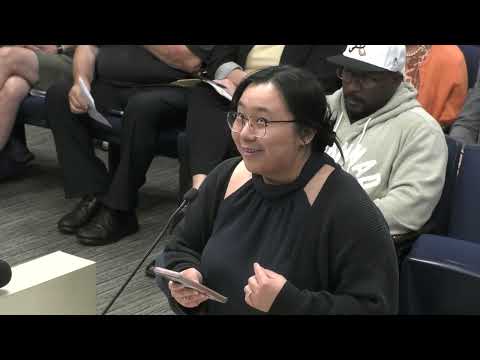
The meeting then turned to more than three hours of public comment. Dozens of residents described evacuations, health effects, lost wages and hotel costs; several speakers demanded that the council use its local land‑use authority to stop bulk storage of methyl methacrylate (MMA) near homes and schools. ‘‘Trust cannot be rebuilt through statements alone. It must be earned through independent audits, disclosures of inspection and findings, stricter and more frequent enforcement and a commitment to keeping this community informed,’’ said Sophia Pang, a resident. Multiple commenters urged the council to adopt a moratorium on military manufacturing expansions and to deny permits for GKN’s pending expansion.
Some speakers called for full financial compensation rather than charitable donations. Zuri Rashad, a PhD candidate in chemical engineering, called the spill ‘‘a result of the negligence of GKN aerospace’’ and said the company should ‘‘compensate citizens who are forced to evacuate, pay for all current and future health care needs that result from this incident, bankroll the cost of hazardous waste decontamination, and remove their facility from the city.’’ Other speakers, including employees from GKN, warned that a shutdown would affect hundreds of workers: Katarina, who identified herself as a GKN employee, said she did not want the plant to close because ‘‘500 people or plus don’t want GKN to close because that’s our livelihood.’’
At item two on the agenda, the council discussed communications to GKN demanding accountability and heard a business‑outreach briefing from Assistant City Manager Ursa Luna Reinoso. Staff described a business resource web page, translated outreach surveys and a contact list of 1,158 businesses within the evacuation area; more than 300 businesses had been directly contacted and some reported multi‑day closures and revenue losses. Staff said they are coordinating with Cal OES and SBA on potential economic injury disaster loan support and said Garden Grove has offered to host an SBA business resource center if SBA declares an economic injury disaster.
Steve Carlin, representing GKN Garden Grove, apologized on behalf of the company and thanked first responders. ‘‘We are very much aware that we have broken a trust in the last couple of weeks and we have a long way to go to earn back that trust,’’ Carlin said, and pledged continued outreach and ‘‘complete transparency’’ as GKN’s internal review proceeds. He said the company would hold a town hall and evaluate compensation options, but he declined to commit to specific timelines or to say whether the company will remove MMA storage from the site while investigations and legal matters continue.
Council members pressed GKN for clearer timelines, a public town hall offsite, and options for compensation that do not rely solely on charitable donations. Several council members described the $3 million donation to United Way as helpful for immediate needs but insufficient as full compensation. Council members also discussed the possibility of emergency zoning or a moratorium while investigations proceed; no final moratorium or permit denial was passed at the meeting.
The council recessed into closed session at the end of the evening. Next steps the council identified publicly included continued coordination on resident and business assistance, ongoing air monitoring data sharing with EPA and AQMD, and planned community engagement with GKN. Residents in the meeting asked the council for firm timelines on investigations, a clear claims process, and stronger land‑use measures to prevent future on‑site bulk storage of volatile chemicals near homes and schools.