Get Full Government Meeting Transcripts, Videos, & Alerts Forever!
Get email alerts on the Utilities Infrastructure topic
No spam. Unsubscribe anytime.
City utilities outline costs and trade-offs for converting overhead power lines to underground
Summary
Paul Jacobjack told the council undergrounding delivers visual and reliability benefits but is costly and technically complex: preliminary estimates range from about $500,000 for Clay Street work to roughly $1 million for the Pearl Street corridor, plus homeowner meter upgrades that could run $1,000–$5,000 per residence.
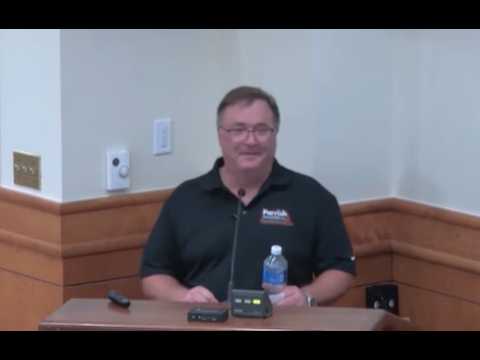
Paul Jacobjack gave the council a technical briefing on the trade-offs and costs of converting the city’s overhead electrical distribution to underground infrastructure.
“Underground is more aesthetically pleasing and reduces tree contacts and squirrel outages,” Jacobjack said, but he cautioned that the work is capital-intensive and technically complex. He outlined how overhead poles carry primary (higher-voltage) lines, secondary service lines and communications cables; undergrounding requires space for conduits and coordination with other utilities.
Using recent local examples, Jacobjack said the city’s Clay Street conversion cost roughly a half-million dollars for the conduit and wiring. Preliminary work on Pearl Street—limited to conduit and wiring for single-phase service—was estimated at about $600,000; Jacobjack said the total for a more complete Pearl Street conversion, including residential service changes, could approach $1 million. He warned that complete elimination of overhead across a busier corridor such as US‑12 could run into multimillion-dollar territory and would take years to execute.
Council members pressed staff about customer-side costs and permitting. Jacobjack said the city’s electrical inspector may require meter-base and, in some homes, interior panel upgrades; staff estimated residential customer-side work could range from roughly $1,000 to $5,000 per home depending on age and service size. “Some meter bases accept underground service and others do not,” he said, explaining the variance.
Jacobjack reviewed nontechnical constraints: underground space is limited (gas, water, storm sewer, fiber occupy subsurface corridors), locating and repairing underground faults takes longer, and telecom attachment contracts can shift costs. He noted a contract clause the city recently inserted that would require one pole attachor to place lines underground at its own cost if poles were removed, but other carriers do not have the same clause.
Next steps he recommended were continued coordination with the electrical inspector; targeted conduit installation when street work occurs; systematic area-selection for phased deployment; and budgeting that could begin next fiscal year if council wants to pursue the work incrementally.
The presentation prompted follow-up from council about phasing (Clay, Pearl, US‑12), the feasibility of adding conduits during road projects and the possibility of compelling or leasing conduit to communications providers. Paul said the city can put conduit in during street reconstruction where practical, but full conversions must address customer-side wiring and inspection requirements.
The council did not adopt a funding plan at the meeting; staff said they would return with budgeting options and continue coordination with the electrical inspector and communications providers.