Get Full Government Meeting Transcripts, Videos, & Alerts Forever!
Get email alerts on the Safety Investigations topic
No spam. Unsubscribe anytime.
WMSC adopts three investigation reports and presses Metro for faster fixes on red‑signal overruns
Summary
The Washington Metrorail Safety Commission unanimously adopted three investigation reports — a NOMA collision and two red‑signal overruns — and commissioners urged Metro to accelerate inspections, rules‑compliance monitoring and targeted training to reduce recurring yard and station overruns.
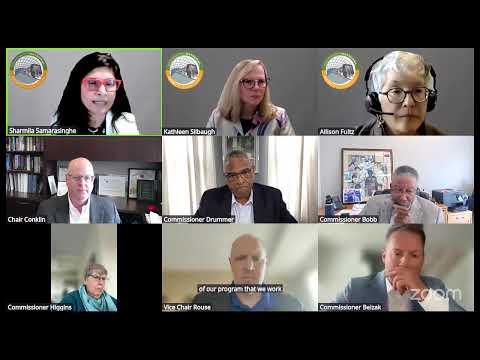
The Washington Metrorail Safety Commission on June 10 adopted three investigation reports, including a collision at NOMA station and two red‑signal overruns, and used its public meeting to press Metro for more immediate steps to curb persistent operational lapses.
WMSC investigator Mr. Quigley summarized the reports, saying of the NOMA collision that “the probable cause of this event was the individual's intentional unauthorized entry onto the roadway” and noting Metro deenergized third rail and dispatched responders; the person was taken to a hospital with non‑life‑threatening injuries. Commissioners then considered two red‑signal overrun investigations tied to yard movements and reroutes into Brentwood yard where operators passed red signals while attempting to enter mainline or yard tracks.
The red‑signal reviews cited operator loss of situational awareness and misapplication of braking modes. In the Sept. 7, 2025 case presented as Whiskey 429, the operator initially applied a B3 braking rate rather than the more restrictive B4/B5 and passed a red signal at about 5 mph, stopping roughly 4 feet beyond the signal; WMSC staff said a corrective action plan calls for territory familiarization training to be completed in 2027. In Whiskey 430 (Sept. 15, 2025), a rerouted non‑revenue movement to Brentwood passed red signal Bravo 9906 after the operator lost speed commands and switched radio channels prematurely; investigators found inadequate territory familiarization and communication breakdowns.
Commissioners, led by Vice Chair Rouse, said training and a multi‑year CAP are necessary but not sufficient. “This is for me a priority,” Vice Chair Rouse said during an extended discussion about enforcement and oversight, arguing for near‑term, targeted actions such as ride‑along observations, focused inspections, and testing to assess compliance with operating rules. Staff reaffirmed that a territory‑familiarization pilot will start next month and that CAP training for all active train operators, interlocking operators and rail supervisors is scheduled for completion by March 2027, but commissioners asked for interim measures to reduce immediate risk.
WMSC staff also presented data showing May 2026 had 253 safety‑event notifications versus a recent monthly average of 321; staff highlighted station overruns as the largest single category. Paul, a WMSC technical presenter, said Metro’s software update 6.2 — rolled out to 64 cars of the 7000‑series fleet — is intended to improve marker‑coil processing and braking profiles and that Metro expects “somewhere around a 14% reduction in the station overruns” if the update performs as designed, while cautioning that other causal factors (such as missing PSS indications) remain unaddressed by that release.
The commission adopted the three investigation reports by unanimous voice vote (5–0). Chair Conklin acknowledged the commission’s limited authority to force immediate operational changes within Metro but said WMSC will use audits, CAP oversight and targeted inspections to press for better compliance. The commission asked staff to return with proposals for more focused enforcement and monitoring activities at a future meeting.
The WMSC also reminded the public to report any safety or security concerns they observe on the Metro Rail system so staff can investigate and, where warranted, elevate issues to corrective action or formal investigations.